Search
Or hit enter to search
 Back to Co-creating Knowledge
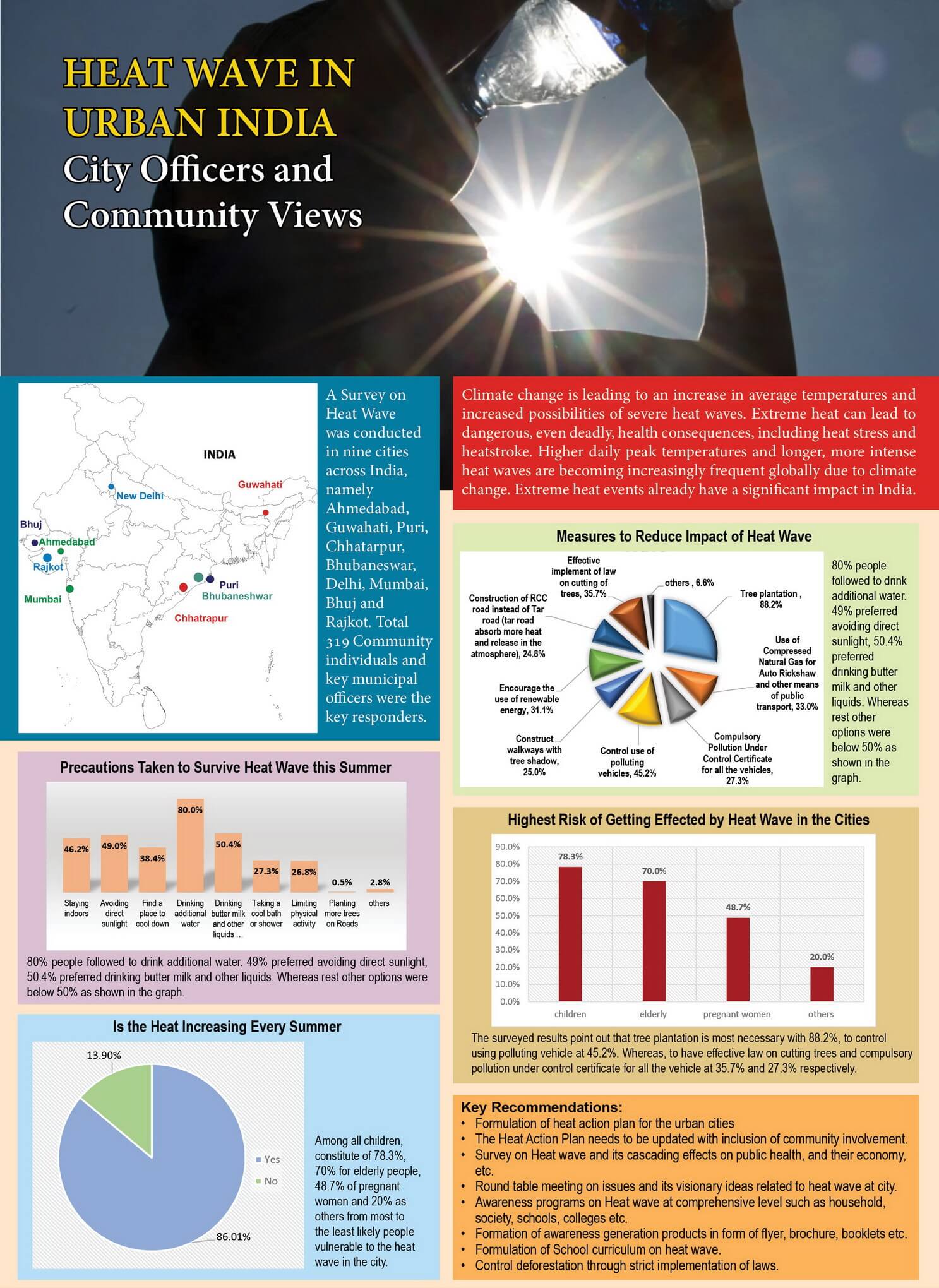
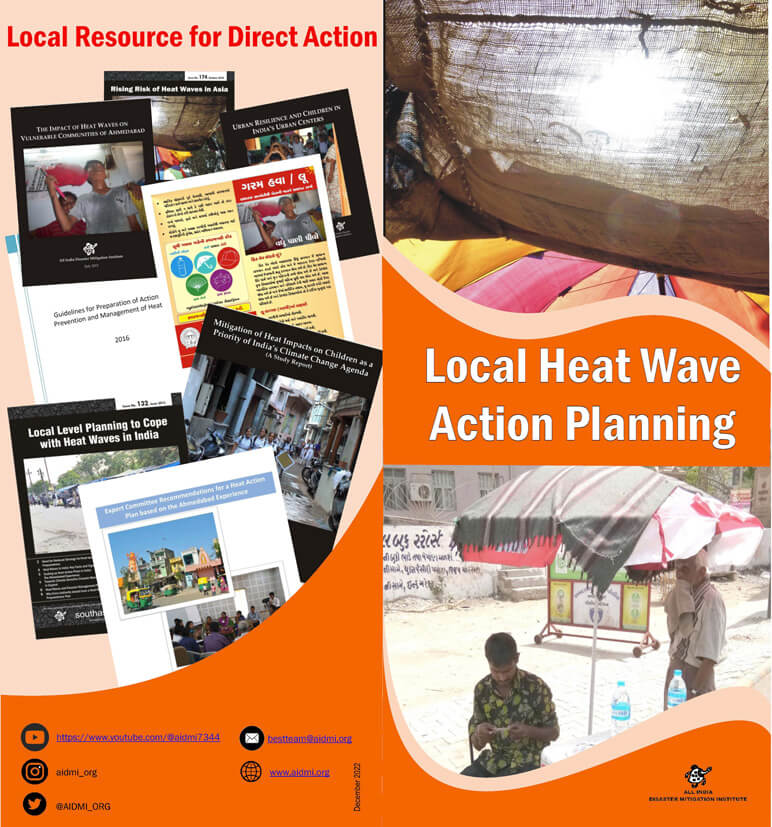
Climate Change is leading to an increase in average temperatures and an increased possibility of severe heatwaves. Extreme heat can lead to dangerous, even deadly, health consequences, including heatstress and heatstroke. Higher daily peak temperatures and longer, more intense heatwaves are becoming increasingly frequent globally due to climate change. Extreme heat events already have a significant impact on India. AIDMI’s work on heatwaves is shown in this action brief.
See Action Brief: Local Heatwave Action Planning
Urban Heat and Rising Risks
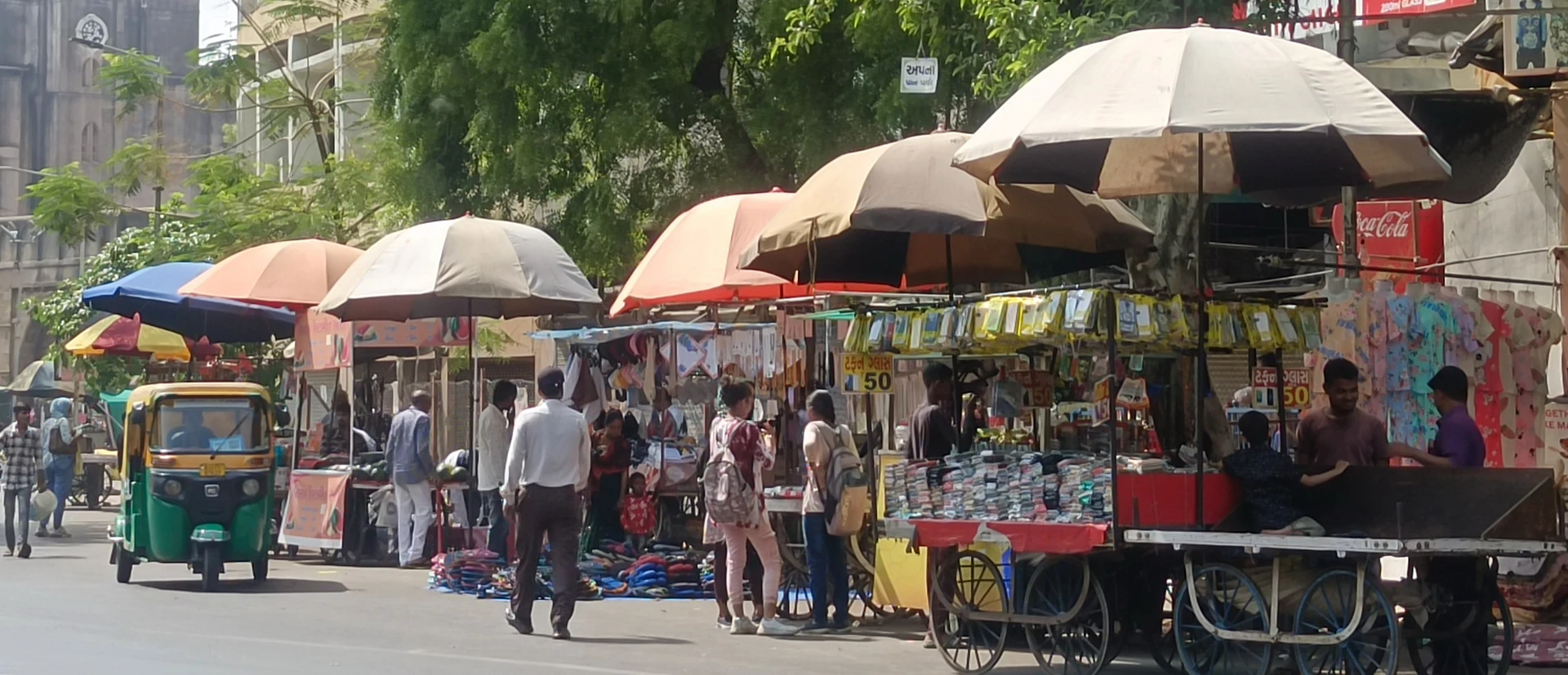
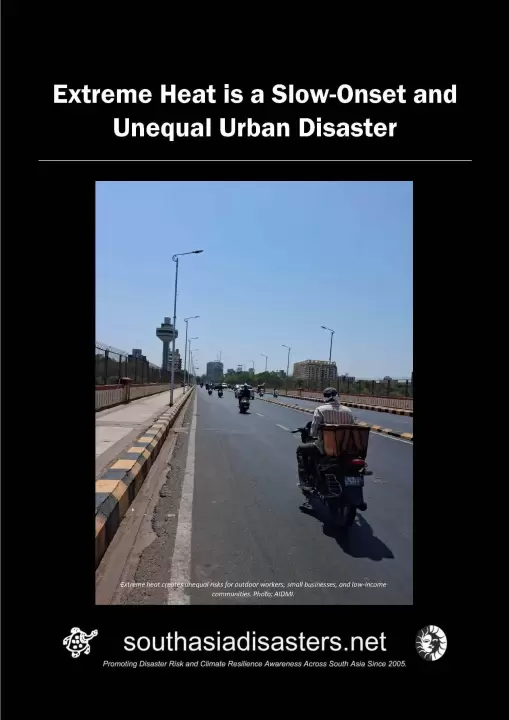
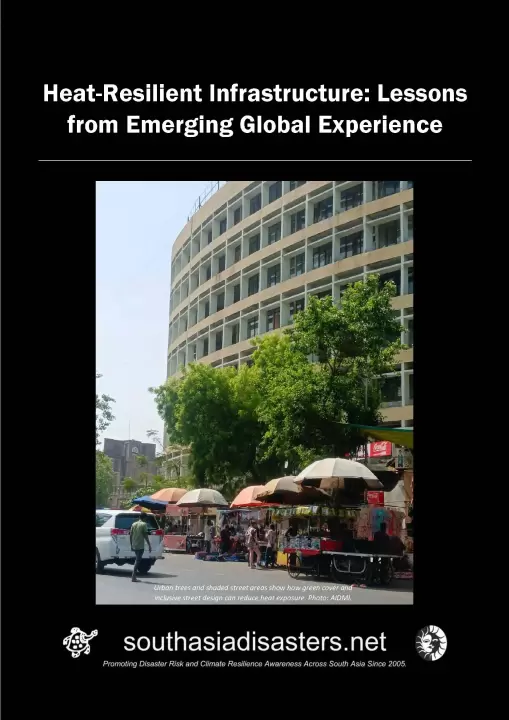
This poster highlights the intense heat experienced in urban areas, where built environments like concrete, asphalt, and dense infrastructure trap and retain solar radiation, causing cities to become significantly hotter than surrounding rural regions. This “urban heat island” effect amplifies the severity of heat waves, leading to higher surface and air temperatures that strain health, energy systems, water resources, and daily life, especially for vulnerable populations such as the elderly, outdoor workers, and low-income communities. Effective planning and adaptation—such as increasing green spaces, using reflective materials, and preparing action plans—are critical to protect residents and make cities more resilient to extreme heat events.