

Search
Or hit enter to search
By Prerna Singh, Transitions Research, India
Heatwaves are becoming deadlier, more frequent, and more widespread—but unlike floods or storms, they rarely trigger the kind of urgent humanitarian aid we associate with sudden disasters. This is not because they are less dangerous, but because they behave differently. Heat doesn’t destroy—it debilitates. It doesn’t arrive suddenly—it builds. And its impacts, though deadly, are often less visible. This makes heat less a case for rapid aid and more one for sustained humanitarian assistance: long-term, preventive support that enables communities to prepare and adapt[1].
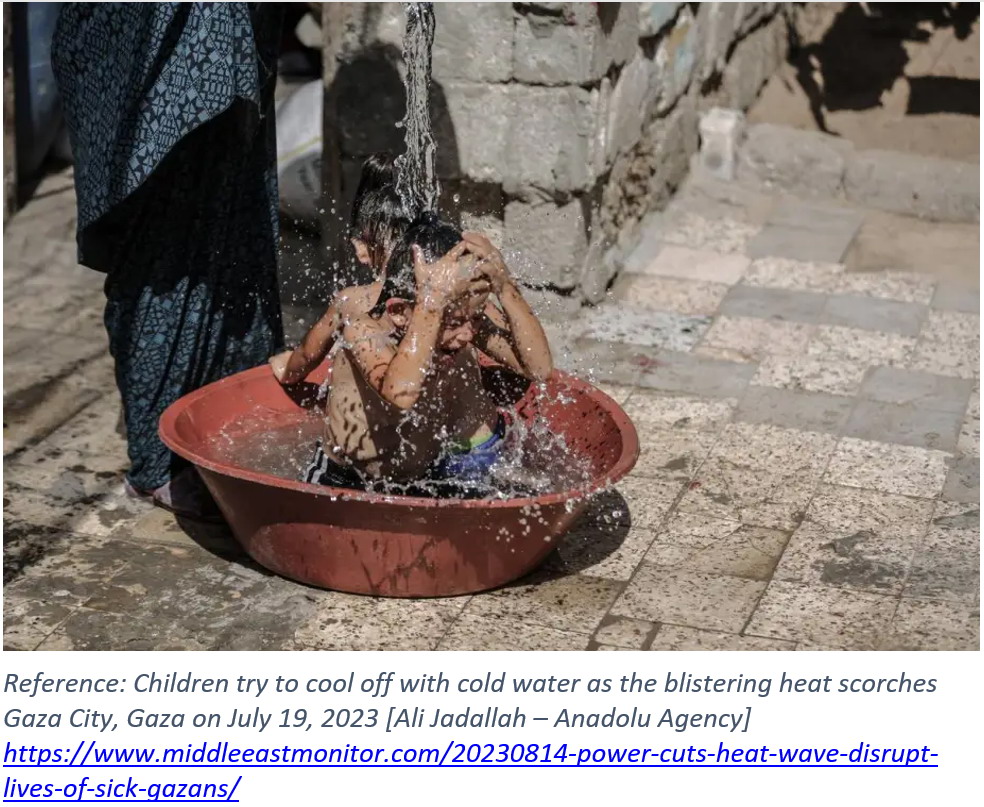
Yet heat increasingly intersects with contexts where humanitarian aid remains essential—such as conflict zones, refugee camps, and post-disaster shelters. Here, it acts as a compound threat, worsening already fragile systems. Most relief camps lack shade, cooling, or ventilation. For women and girls in particular, heat relief strategies like open windows, moving outdoors, or walking in cooler evening hours can conflict with safety[2]. Meanwhile, energy-dependent solutions like air conditioning or electric fans are often unavailable or unreliable due to weak infrastructure[3]. This makes it vital for aid providers to identify alternative, context-appropriate solutions—like passive cooling materials, shaded community spaces, and safe access to water. Humanitarian aid must evolve to recognise these compounding constraints and design for them.
These settings—structurally similar to informal settlements—also serve as valuable testbeds for heat adaptation strategies that could be applied in other vulnerable systems[4]. Community-tested solutions from such contexts—like low-cost shading, hydration points, and adjusted routines—can also inform responses in other vulnerable areas, including peri-urban neighbourhoods or rural villages. These places often also carry rich place-based knowledge that can complement and enhance adaptation efforts. Recognising this creates space for cross-context learning, where practical heat solutions can be adapted to fit different physical, cultural, and social environments[5].
Community involvement is essential in heat response—not just for legitimacy, but because adaptation must reflect local realities. In humanitarian settings, tapping into indigenous coping strategies from similarly heat-affected regions—like South Asia or the Sahel—can offer a critical head start. These communities have long adapted to extreme heat, and their approaches, from shading techniques to hydration routines, can be repurposed for camps or settlements. But with heat becoming hotter, longer, and less predictable, even these strategies need to evolve. Supporting communities to adapt what they know—rather than starting from scratch—is key to building resilience in both stable and crisis-affected settings[6] [7].
Lastly, heat is one of the clearest cases for anticipatory action. Forecasts can trigger simple yet powerful measures—early warnings, water distribution, shelter preparation—that reduce harm before temperatures peak[8]. Making this kind of forward-looking planning routine across humanitarian and development efforts is no longer optional—it’s urgent.
As the planet warms, heat must be treated as a humanitarian crisis in its own right. But unlike many crises, it’s one we can prepare for. Local organisations are already doing so. Our job now is to recognise, resource, and scale their work—before the next heatwave hits.
[1] IPCC (2022). Sixth Assessment Report. Chapter 16: Key risks across sectors and regions. https://www.ipcc.ch/report/ar6/wg2/chapter/chapter-16/
[2] CARE (2023). Gender and Heatwaves: A Dangerous Intersection. https://careclimatechange.org
[3] ICRC & IFRC (2022). Extreme Heat: Preparing for the Heatwaves of the Future. https://www.ifrc.org/document/extreme-heat
[4] UN-Habitat (2021). Adapting Informal Settlements to Climate Change. https://unhabitat.org
[5] Transitions Research & ARA (2025). Community-led Heat Solutions Compendium. https://transitionsresearch.org
[6] Watts et al. (2023). The 2023 Lancet Countdown on Health and Climate Change. The Lancet. https://doi.org/10.1016/S0140-6736(23)01859-7
[7] IFRC (2023). Heat Action in Humanitarian Settings: Global Guidance. https://www.ifrc.org
[8] Coughlan de Perez et al. (2015). Forecast-based Financing: Action before Disasters. Nature, 538, 152–153. https://doi.org/10.1038/nature16492
Disclaimer: The views expressed in this piece are those of the author/s and do not necessarily reflect the views or policies of AIDMI.
