

Search
Or hit enter to search
By Anand Ghodke, WASH-CCES Officer, Yusuf Kabir, WASH-CCES & DRR Specialist, UNICEF Maharashtra, and Nilesh Mankar, Dy Mechanical Engineer, GSDA, Nagpur, Maharashtra, India
Background
Maharashtra continues to face acute challenges, including drought, intermittent power supply, and heatwaves, as climate change drives higher cooling demand. Rural communities, however, cannot afford individual solutions such as individual water supply systems, air conditioners, or coolers. To address these linked concerns of water, energy, and climate resilience, UNICEF and its partner SACRED, in collaboration with Zilla Parishad Nagpur, implemented “The Green Project” in seven locations of Nagpur district, introducing cost-effective, community-driven solutions.
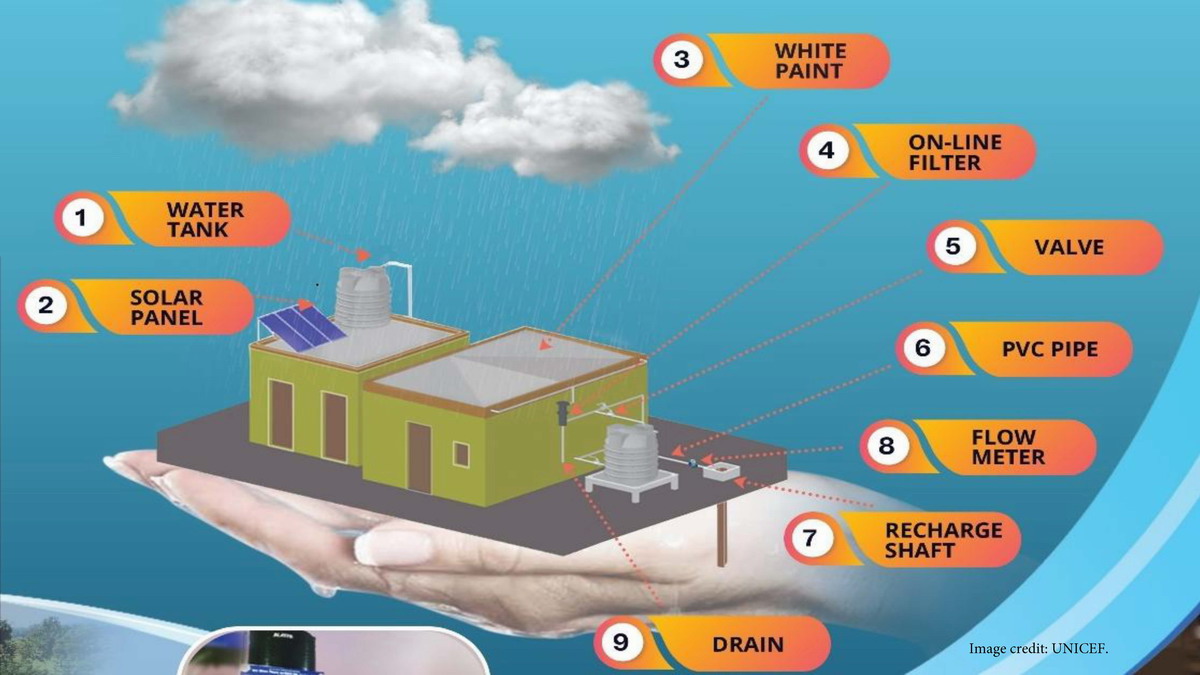
Modus Operandi: The demonstration under “The Green Project” aimed to address water scarcity, energy shortages, and climate change resilience in Nagpur, Maharashtra, through the use of innovative mitigation technologies. The project integrated technologies to conserve natural resources and promote sustainability. It utilises existing borewells for water recharge, implements rainwater collection systems, applies reflective white paint to reduce indoor temperatures, and integrates solar-powered pumps to reduce grid dependency.
Key features of green technologies included:
Results:
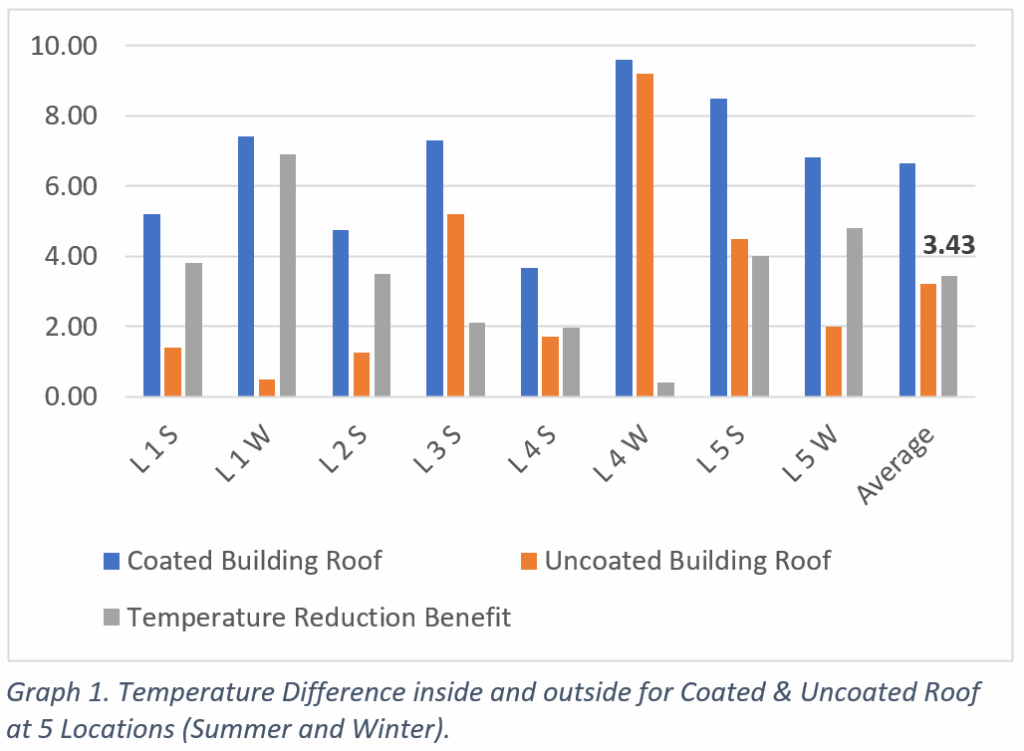
Result 1. Temperature Reduction and Cooling Impact
Table 1. Temperature Difference inside and outside for Coated & Uncoated Roof at 5 Locations (Summer & Winter)
| Type of Roof | Average |
| Coated Building Roof – Average Temp | 6.65 |
| Uncoated Building Roof – Average Temp | 3.22 |
| Temperature Reduction – Cooling Impact | 3.43 |
Result 2. Reduction in Energy Consumption
According to the study conducted under this approach, using a single 2 HP solar pump will result in a cost savings of Rs. 10,368 per year/year while reducing 1,071.36 kg CO2 emissions annually. The solar net metering indicates a reduction of approximately 60-70% in grid electricity consumption, resulting in an annual saving of approximately 10,000 INR. The details of the grid energy consumption is presented below:
Table 2. Nand Primary Health Cente, Bhivapur, Nagpur
| Average Monthly Electricity Units before | Units Consumed During the month after |
| 1100 | 388 |
Result 3. Reduction in Energy Consumption
In the case of water harvesting, the observation reveals that even if there is no significant increase in the water levels, the depletion is either reduced, constant or sustained.
Way Forward
Early results showed improvements in groundwater levels, reduced runoff, lowered room temperatures, and enhanced energy efficiency. This holistic approach not only addresses local water and energy issues but also contributes to achieving Sustainable Development Goals (SDGs) by fostering environmental sustainability and community resilience. The project showcases a scalable, cost-effective solution for rural and tribal areas affected by climate change.
Disclaimer: The views expressed in this piece are those of the author/s and do not necessarily reflect the views or policies of AIDMI.
