

Search
Or hit enter to search
By AIDMI Team
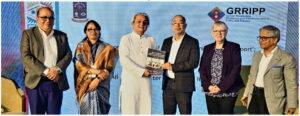
For twenty years, Southasiadisasters.net has connected local experiences with global frameworks, capturing the pulse of resilience across South Asia and beyond. From its first issue in 2005 to the landmark 225th issue in 2025, the publication has served as a bridge among practitioners, researchers, policymakers, and affected communities. With over 2,400 articles authored by 1,889 contributors from 67 countries, this living archive stands as a testament to the power of shared learning, solidarity, and community action.
Who Reads Southasiadisasters.net
The readership of Southasiadisasters.net mirrors the diversity of the resilience community itself. Practitioners make up the majority (about 55%) and bring field-level perspectives from across Asia and Africa. Researchers and academicians represent another 20%, followed by policymakers and government officials (15%), and community leaders, students, and volunteers (10%). This unique blend ensures that every issue speaks to both the doers and the decision-makers.
The Contributors Behind the Knowledge
Over two decades, Southasiadisasters.net has published 2,413 articles, authored by 1,889 identified contributors and 524 anonymous writers. The network spans 67 countries, led by India (1,237 authors), followed by the UK, Bangladesh, Switzerland, Sri Lanka, Nepal, Thailand, and Pakistan. Practitioners from civil society make up the largest group (58%), complemented by academics, researchers, journalists, and policymakers. Together, they form a truly global community of practice committed to disaster and climate resilience.
Thematic Diversity Across 224 Issues
The 224 issues published before this milestone have explored a remarkable range of topics. The most frequent themes include Disaster Recovery (22 issues), Natural Hazards (19), Disaster Risk Reduction (18), COVID-19 Pandemic (16), and Climate Change and Disasters (15). Others have focused on Catastrophic Disasters, School Safety, Urban Resilience, Humanitarian Action, Governance, Microinsurance, Early Warning, and Community-Based Disaster Risk Management. Each theme reflects the evolving landscape of risks and the search for solutions.
Localisation in Action
From its inception, Southasiadisasters.net has been grounded in local realities. It has consistently been published in and about multiple South Asian languages, amplifying community perspectives often lost in academic or policy texts. As JC Gaillard notes, its strength lies in valuing all forms of knowledge—local, indigenous, and experiential—without forcing translation or hierarchy. This makes it one of the few genuinely decolonised platforms in the disaster studies and practice ecosystem.
Building Resilience, Issue by Issue
Resilience has been the central thread running through every issue. Over two decades, the publication has showcased local recovery, adaptation, governance, and innovation. It has an advanced understanding of microinsurance, anticipatory action, and climate finance while emphasising community participation. The 225 issues together form one of the largest archives of resilience learning in the Global South, reflecting a sustained commitment to continuity and local leadership.
Making Extreme Heat Visible
Among the most recent and significant themes is extreme heat. Since 2022, Southasiadisasters.net has become a leading voice documenting this emerging humanitarian challenge. Issues on “Heat as a Humanitarian Crisis” and “Nature-Based Cooling Solutions for Cities” have highlighted the risks faced by small businesses, women workers, and informal livelihoods. AIDMI’s pioneering work with SEWA and local partners has turned this focus into a model for community-based adaptation and anticipatory action.
Centring Affected Populations
The publication has never lost sight of its purpose—to amplify the voices of those most affected. Across 2,400 articles, women, children, the elderly, persons with disabilities, farmers, and informal workers have all found representation. The stories of these communities, told in their own words and contexts, have shaped a more inclusive understanding of risk and resilience.
Gender and Resilience
Gender equality has been both a theme and a principle. From special issues on “Women’s Leadership in DRR” to case studies of women-led resilience initiatives in Sri Lanka, Bangladesh, and India, Southasiadisasters.net has consistently underscored the central role of women in disaster risk reduction, climate adaptation, and humanitarian response. Its gender lens is not symbolic—it is structural, woven into the journal’s DNA.
A Timeline of Twenty Years
The journey of Southasiadisasters.net is marked by key milestones:
Guiding Voices and Advisors
The Southasiadisasters.net’s journey has been guided by a distinguished advisory board. Current advisors include Anoja Seneviratne (Sri Lanka DMC), Denis Nkala (UNDP USA), G. Padmanabhan (UNDP India Retd.), Dr Ian Davis (UK), Dr P.G. Dhar Chakrabarti (India), and Dr Satchit Balsari (Harvard FXB Center). Past advisors and contributors have included renowned figures such as Ben Wisner, Zenaida Delica-Willison, JC Gaillard, John Twigg, Madhavi Malalgoda Ariyabandu, Kala Peiris De Costa, Khurshid Alam, Rita Schneider–Sliwa, O.P. Mishra, T. Nanda Kumar, and Anshuman Saikia.
Readers’ Recommendations for the Future
Preserve linguistic and cultural diversity by promoting contributions in local languages.
What Practitioners Value Most
Practitioners across South Asia recognise Southasiadisasters.net for its practicality:
Policy Impact and Value
For policymakers, the publication serves as a field-tested source of evidence:
A Donor’s Agenda for the Future
For donors and development partners, Southasiadisasters.net offers clear direction:
Conclusion
The 225th issue of Southasiadisasters.net is not merely a celebration of numbers—it is a celebration of commitment, collaboration, and continuity. It reflects AIDMI’s belief that resilience begins with knowledge and that knowledge must be shared widely, across languages, boundaries, and disciplines. As it looks toward its next hundred issues, the publication continues to stand for the principles on which it was founded: grounded learning, inclusive voices, and the collective pursuit of safer, more resilient communities across South Asia and the world.
