

Search
Or hit enter to search
By Mihir R. Bhatt, AIDMI, India
| “The next decade of climate resilience will be shaped not by declarations, but by the daily leadership of communities of Asia and Africa.” |
A clear message emerges from this special issue: communities in Asia and Pacific are not waiting. Across South Asia and Africa, they are building resilience every day—through early warnings in Tajikistan, girls’ education in Nepal, agroforestry in Ghana, coastal ingenuity in Bangladesh, climate-safe transport in Kenya, and youth-led innovations across India. Their leadership shows that the centre of climate action has already shifted to the local level, and money and expertise will help achieve results.
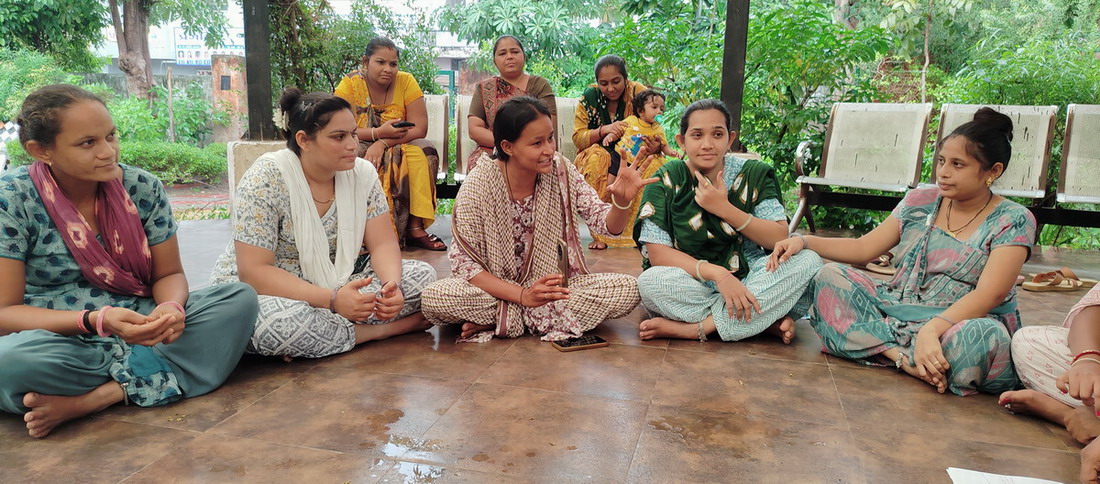
AIDMI’s own work of mutual aid with extreme heat resilience for small businesses in Indian cities reinforces this truth. Small business owners—one of the most climate-exposed groups in urban India—are already adapting through altered work hours, shared water points, and makeshift shade. Through direct support to small businesses, AIDMI has helped unleash their coping capacities by using umbrellas, green nets, fans, reflective materials, and heat safety awareness action programmes. The learning is unequivocal: local action saves lives, protects livelihoods, and strengthens climate resilience long before formal top-down systems intervene.
| “Extreme heat, floods, droughts, and storms cross borders — but so can our solutions, if we in Africa and Asia choose collaboration over isolation.” |
The way ahead requires systems to match the speed and energy of these communities.
First, climate finance must become simpler, faster, and more accessible to local governments, producer groups, youth networks, and women-led collectives. Micro-grants, community contingency funds, and livelihood-focused climate finance must move from pilot to policy that supports mutual aid.
Second, early warning must evolve into early action—with last-mile communication, local risk verification, and preparedness budgets that reach schools, health workers, panchayats, and small businesses. Tajikistan’s EW4All experience shows that when global frameworks devolve power to communities, resilient results follow.
Third, both urban and rural planning must fully integrate Heat Action Plans, nature-based solutions, and climate services. From Ahmedabad to Guwahati, AIDMI’s heat assessments show that cities need neighbourhood-level cooling strategies, safe work standards, and finance for micro-enterprises—because heat is now also a major economic risk to the national economy.
Fourth, youth leadership must be recognised as a core climate resilience asset. Their clarity, experimentation, and coalition-building—whether in water conservation, green skills, or activism—are shaping more ambitious and inclusive climate action in Africa and Asia.
Fifth, regional learning must accelerate. Bangladesh’s coastal resilience strategies can inspire India’s delta regions; Ghana’s dryland restoration can strengthen India’s arid zones; Kenya’s transport transition can inform South Asian just-transition dialogues. South–South learning is the emerging link in scaling community-led resilience.
The future of climate and extreme heat resilience will not be built in rooms or public halls alone—it will be built in farms, markets, workshops, riverbanks, slums, forests, and neighbourhoods. Our task now is to listen to communities, invest in their leadership, and remove the barriers that slow them down taking actions.
If we do so, the next decade can be one of shared learning, faster adaptation, stronger cooling solutions, and climate justice for those who face the greatest risks in Asia and Africa.
