

Search
Or hit enter to search
By Gavin White, Risk-informed Early Action Partnership (REAP) Secretariat, and Mihir R. Bhatt, All India Disaster Mitigation Institute (AIDMI), India
| “Community resilience begins with recognising local actors, especially women-led organisations, as first responders and knowledge holders. Early warning, early action, and early finance must be grounded in trust, flexible funding, and community leadership to strengthen peacebuilding, reduce vulnerability, and support dignified humanitarian responses in fragile and conflict-affected settings.” – Dr. Irene DAWA, Honorary Research Fellow, Faculty of Humanities, Arts and Social Sciences, University of Exeter, UK |
Early warning must lead to early action; an early action must be supported by early finance. This is AIDMI’s experience on the ground in India with thousands of extreme heat-affected small businesses in small towns for years, and is supported by the practice of over 100 partner governments and organisations collaborating in the framework of the Risk-informed Early Action Partnership (REAP).
Across South Asia and beyond, climate risks are becoming increasingly predictable, yet their impacts continue to deepen. Extreme heat, floods, and other hazards are no longer isolated events—they are shaping everyday risks for health, livelihoods, and local economies. In this context, early warning systems have improved significantly, offering valuable time to prepare. Yet, this growing capacity to predict risk is not matched by an equal ability to act on it.
This gap between knowing and doing is where this special issue begins. Looking specifically at extreme heat, this issue documents the breadth of innovative approaches in India, from the Avoidable Deaths Network’s campaigns to concrete examples from AIDMI’s field engagement with small businesses, transport workers, and small shop owners to build heat resilience. It documents the success of the Ahmedabad Municipal Corporation (and its Ahmedabad Heat Action Plan), as well as efforts to translate India Meteorological Department’s heat alerts into practical guidance for those most at risk.
Subsequent articles in this issue are informed by discussions held during Humanitarian Networks and Partnerships Week (HNPW) 2026, where practitioners, researchers, and policymakers came together to reflect on the future of early warning and anticipatory action. These discussions, emerging from selected panels organised and facilitated by organisations and networks such as ALNAP, the Norwegian Refugee Council (NRC), the Avoidable Deaths Network (ADN), the ADAPT Initiative, or the Climate Charter for Humanitarian Organisations, helped shape a shared understanding among a wide range of stakeholders and partners. Together, they reinforced the importance of linking early warning with early action, strengthening resilience, and advancing the need for early finance as a critical enabler of effective disaster risk management.
The collaboration between REAP and AIDMI reflects this connection. While REAP works to align global systems, policies, and finance, AIDMI’s local work demonstrates how early action unfolds on the ground—through small but meaningful decisions taken by those most at risk. As highlighted in ongoing collaboration discussions, bridging these perspectives is essential to ensure that global ambition translates into local outcomes.
Since 2015, several institutions, such as the World Bank and the Green Climate Fund, have significantly increased their financing towards EWEA, while the creation of the Climate Risk and Early Warning Systems (CREWS) launched the first dedicated fund to address the gaps in early warning systems delivery. The creation of several coordination initiatives over the last few years – REAP in 2019, the Anticipation Hub in 2020, and the Early Warning for All initiative in 2022 – have helped to create spaces for partners to share their experiences and build bridges across efforts to reach comprehensive early warning systems and embed anticipatory action protocols ahead of forecasted disasters.
However, while the largest amounts of funding are going to unplanned crisis finance, significantly less are allocated to pre-arranged finance, and very small amounts go to early or anticipatory action. There are indications that overall amounts are growing, but nowhere near the scale required to respond to the increasing frequency and severity of climate impacts. Funding for early action remains small and fragmented and this creates unnecessary complexity. (REAP 2022)
The REAP 2030 Strategy – developed through an extensive consultative process bringing together national NGO networks, governments from vulnerable countries and regional and international organisations – acts as a frame to better address these challenges (REAP 2025a). Growing political momentum is already visible via global initiatives like the Early Warnings for All, the Global Shield Against Climate Risks, the Anticipation Hub, but also via regional and national frameworks and the work on the ground of actors such as those presented in this issue. However, the REAP Strategy also recognises that while global systems have advanced in generating information, they remain fragmented in translating that information into outcomes. Finance is often delayed, policies are not fully aligned, and local capacities are under-utilised.
The articles in this issue reflect this transition from awareness to action. They are grounded in real experiences—of workers, small businesses, and communities navigating increasing climate risks. These experiences demonstrate that early warning is not merely about disseminating information, but about enabling decisions that protect lives and livelihoods in advance of risk. What is found at global level is also found to be relevant at local level.
A strong theme emerging across contributions is that many disaster impacts are preventable. When hazards such as extreme heat are predictable, the persistence of loss signals gaps in preparedness, coordination, and timely action rather than inevitability. This shift in thinking—from response to prevention—is central to strengthening disaster risk management in a warming world.
Equally important is the recognition of locally led action. Community-based systems, mutual support practices, and everyday coping strategies continue to play a vital role in managing risk. These systems are often the first to respond and the most sustained over time. Strengthening them requires supportive policies, appropriate financing, and respect for local knowledge and initiative.
At the same time, the discussions reflected in this issue highlight how climate risks are reshaping vulnerability and preparedness systems. Livelihood disruption, displacement, and prolonged exposure to risks such as extreme heat are increasingly interconnected. This calls for approaches that go beyond isolated interventions and instead focus on anticipatory, integrated responses.
The question of financing runs across these experiences. In line with a growing body of research (REAP 2025b), the articles in this issue highlight that while communities are already adapting through practical and low-cost measures, financial systems are often not designed to support such early and localised action. The need for flexible, timely, and accessible finance—aligned with risk information—remains critical if early action is to be realised at scale.
Bringing these perspectives together, this issue reflects a broader transition in thinking. Early warning, early action, and early finance are not separate ideas—they are interconnected elements of a system that must function together within disaster risk management.
This special issue is therefore not only about documenting experiences. It is about drawing lessons about recognising the importance of acting early, learning from practice, and strengthening the systems that make early action possible.
References:
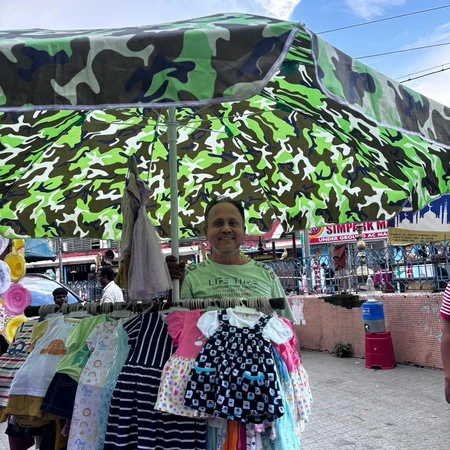
Photo caption: Facing extreme heat on the street—where early warning, practical action, and small financial support together protect lives and livelihoods. Photo: AIDMI.
Disclaimer: The views expressed in this piece are those of the author/s and do not necessarily reflect the views or policies of AIDMI.
