Search
Or hit enter to search
A Trusted Network for Heat Action
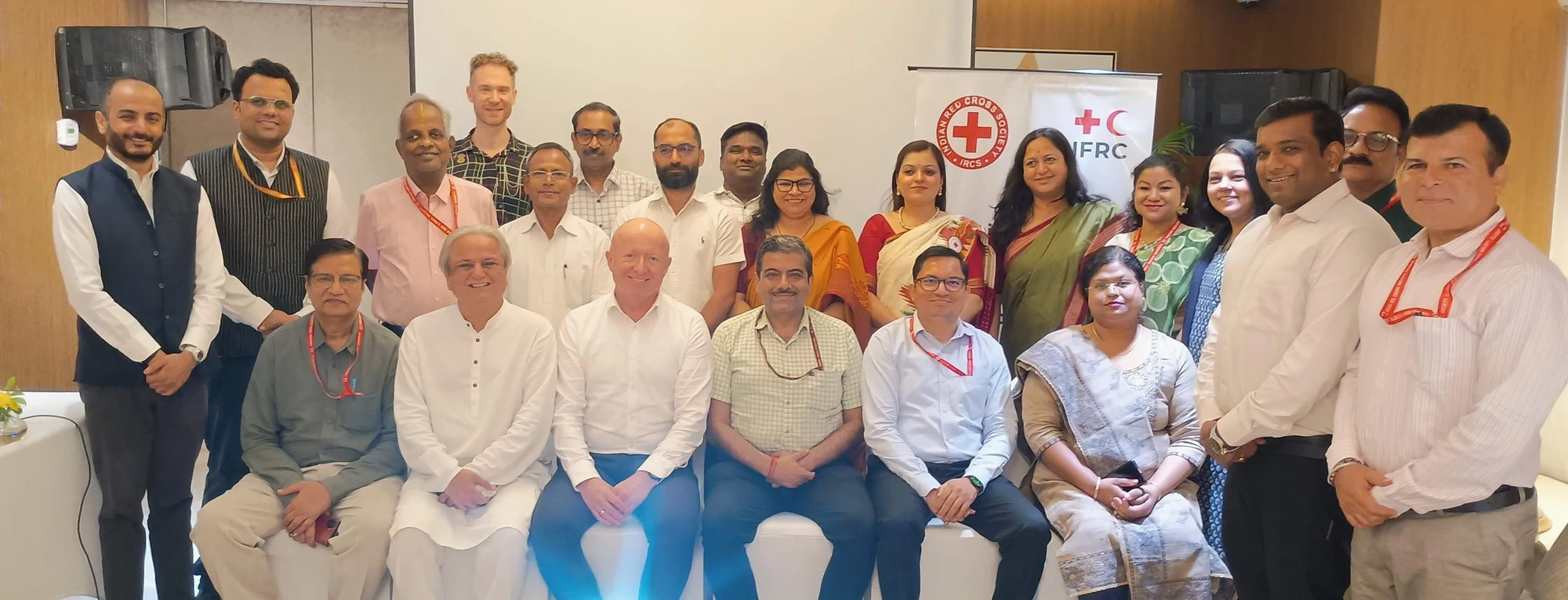
Red Cross Societies in India have high public trust, wide community reach, and a trained volunteer force with long experience in humanitarian preparedness, response, and recovery. This gives them a strong role in preparing for the 2027 summer extreme heat season. The Red Cross Learning Exchange on Heat Resilience and Anticipatory Action, organised by IFRC[1] and IRCS[2] on June 30, 2026 in New Delhi, showed how the Climate and Environment Charter can be used as a practical planning tool by State Red Cross Societies.
Using the Charter for Planning
The Climate and Environment Charter[3] is useful as it does not ask organisations to start a separate project. It helps them improve existing work on preparedness, health, first aid, volunteer management, relief, partnerships, and community outreach. Its seven commitments support adaptation, local leadership, climate-risk understanding, environmentally responsible action, collaboration, influence, and measurable progress.
AIDMI[4] conducted the Charter session and, as a Charter signatory, views it as a practical tool for planning heat resilience. AIDMI’s current work on extreme heat includes urban and rural actions with at-risk groups, especially small farmers, small businesses, transportation workers, women, school communities, and low-income communities. These efforts focus on local cooling, heat-risk awareness, safer working conditions, drinking water, shade, and evidence for stronger heat action planning.
Building on State-Level Action
State Red Cross Societies such as Odisha, Gujarat, Punjab, Uttar Pradesh and others are already taking initiatives related to extreme heat response, cooling solutions, and support to vulnerable populations. These actions can be further strengthened through Charter-aligned planning. For example, heat safety can be included in volunteer training, first-aid systems, local preparedness plans, public messaging, and coordination with state and district authorities.
Advocacy and Collective Preparedness
Extreme heat preparedness cannot be done by one institution alone. The workshop brought together IFRC, Indian Red Cross Society, State Red Cross Societies, AIDMI, NDMA, and the Red Cross Red Crescent Climate Centre, showing the value of collective action. Red Cross Societies can use their trusted local presence to advocate with authorities and communities for heat-safe public spaces, volunteer safety, IMD forecast-linked early action, and inclusion of at-risk groups in Heat Action Plans. This collaboration can help connect early warning with early action before heat becomes a health emergency.
From IMD Forecasts to Early Action
A major opportunity for 2027 is to use IMD[5] forecasts and heat alerts more systematically. Forecasts can trigger early action before heatwave days. Red Cross volunteers can support door-to-door messaging, phone check-ins for older persons and high-risk households, ORS and drinking water access, shaded rest points, cooling spaces, and referral pathways for heat-related illness.
Charter-Aligned Cooling Actions
Cooling actions should be safe, low-cost, locally appropriate, and environmentally responsible. Shade, ventilation, cool rooms, public cooling points, safe drinking water, adjusted work hours, and heat-safe public spaces can reduce heat stress without creating avoidable waste or unsafe energy demand. These actions are especially important for older persons, children, pregnant women, people with disabilities, outdoor workers, small businesses, informal workers, and people living in dense settlements.
Preparing Before Summer 2027
Each State Red Cross Society can set a few practical targets before April 2027: train volunteers on heat safety, map high-risk areas, identify cooling points, prepare heat early action protocols, and document lessons after the summer. In this way, the Climate Charter can help turn trusted humanitarian capacity into timely, people-centred action before extreme heat becomes a health emergency.
– Vishal Pathak, All India Disaster Mitigation Institute, vishalp@aidmi.org
[1] The International Federation of Red Cross and Red Crescent Societies (IFRC), www.ifrc.org.
[2] The Indian Red Cross Society (IRCS), https://www.indianredcross.org/.
[3] The Climate and Environment Charter for Humanitarian Organisations, https://www.climate-charter.org/.
[4] All India Disaster Mitigation Institute, www.aidmi.org.
[5] India Meteorological Department, Ministry of Earth Sciences, Government of India, https://mausam.imd.gov.in/index_en.php.