Search
Or hit enter to search
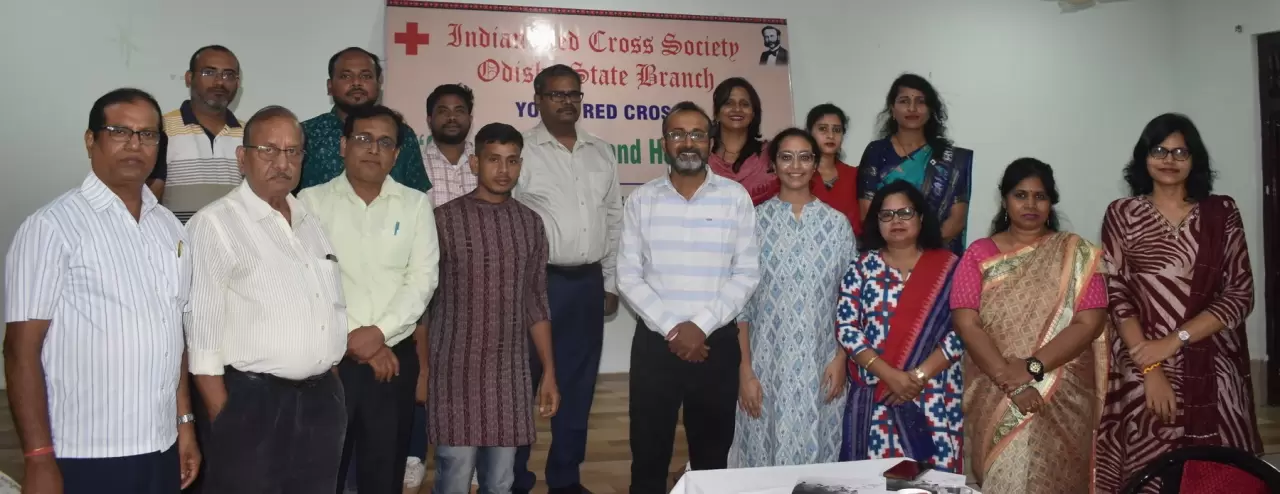
On 24 July 2026, the Odisha State Red Cross Society organised a focused session in Bhubaneswar on translating the Climate and Environment Charter into practical action against extreme heat. The session was chaired by the Secretary and Joint Secretary of the Odisha State Red Cross Society, India’s leading Red Cross Society, and facilitated by the All India Disaster Mitigation Institute (AIDMI), a signatory to the Charter and supported by the Red Cross movement.
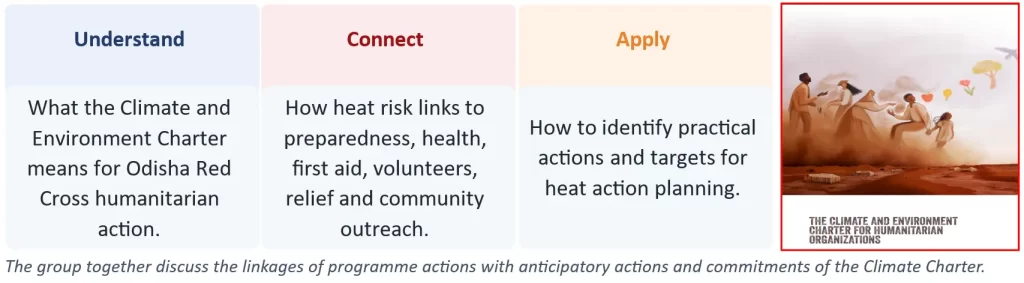
The session brought together 24 practitioners and educators actively associated with the Odisha State Red Cross Society and the education sector. It created a space to examine how the Charter can strengthen existing work on preparedness, health, first aid, volunteer safety, community outreach and local partnerships. The presentation emphasised that the Charter is not a separate project, but a practical framework for improving current humanitarian programmes and institutional systems.
Participants discussed Odisha’s wider risk context, including extreme heat, cyclones, floods, drought, water stress and public health risks. They reflected on how heat affects health, livelihoods, mobility, education, caregiving and the safety of Red Cross volunteers. The programmes of the state office is very much focused on older persons, children, pregnant women, persons with disabilities, outdoor workers, small businesses and people living in densely populated settlements.
Three Charter commitments emerged strongly from the discussion: adaptation, local leadership and influencing decision-makers. Participants shared examples of actions already being taken locally and identified how these could be strengthened further through focus on sensitization on extreme heat adaptation measures that are low-cost. These included heat-risk communication, volunteer mobilisation, drinking-water and ORS support, shaded rest areas, school-based awareness, support to high-risk households, first aid and referral, use of extreme heat forecast, and coordination with district and state authorities.
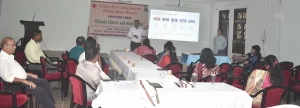
The session reinforced that effective heat action must connect forecasts with early, locally led and people-centred measures before extreme heat becomes a health emergency. It has decided to take this work ahead to each district and other signatories from now to 2027 summer and mobilise resources for the same most urgently.