

Search
Or hit enter to search
By Harakh Patel, AIDMI, India
| “Protect coastal livelihoods by combining heat-health awareness, safer workspaces, cool roofs, ventilation, and livelihood-sensitive Heat Action Planning.” |
Livelihood plays a central role in the lives of home-based women small business owners and artisans in coastal regions of India. Through every season, their daily schedules revolve around the time they need to work on their craft and to carry out daily duties to sustain their household. Extreme heat is an increasing summer occurrence in Odisha. While coastal communities are familiar with preparedness for cyclones and floods, heat does not always receive the same level of attention. However, small home-based businesses and artisans in the coastal district of Puri are growing more conscious of how to protect their livelihoods in extreme climate conditions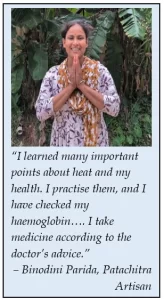
There is a challenge in balancing protecting one’s health from heat while not compromising on livelihood development. The outdoor markets in Odisha remain closed from 12 PM to 4 PM during the summer months to reduce exposure and prevent heat-related illnesses faced by both businesses and customers. However, artisans in the Puri district revealed in conversation that artisans face reduced earnings, as market activities shifted to cooler hours, reducing the time they could comfortably allocate to their craft. Heat planning must accordingly consider how changes affect income and daily routines.
Does wanting to protect their income justify keeping the market open during dangerously hot hours of the day? Awareness and inclusion in design are crucial here. We shared with the artisans that the UV rays index during the summer in India reaches highs of 13+ during peak afternoon hours, but drops to moderate levels of 3-5 from 4 PM[1]. The artisans had raised concerns of skin diseases, worsening allergies and irritations, but only just became aware of how UV rays from the sun can lead to these illnesses, contributing to decisive efforts to cool their indoor work spaces to ease working in the afternoon. Interventions combined with awareness allows at-risk populations to be sympathetic of action taken and opens channels for local adaptation solutions.
Disaster-resilient infrastructures built in spaces that face co-location of hazards and cascading effects must try to cater to all relevant disaster risks. Home-based small businesses and artisans have reduced exposure to the sun, but still face extreme heat during the day and night. Their homes, now made of cement to protect them from cyclone and flood damage, are structures that harbour and trap heat from the day into late hours of the night.
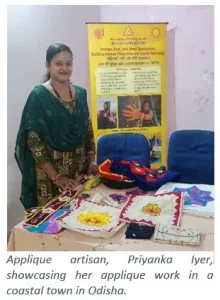 When optimal night temperatures are not maintained, quality of rest and recovery reduces. Heat stress from the day bleeds into the night and the following days, weakening mental health and intensifying fatigue. While the nature of their work often does not allow artisans to use a fan for cooling, they have recognised the need for effective cross-ventilation and cool roofs for cement homes. The nature of an artisan’s business informs their approach to resilience.
The work of an artisan is physically and mentally demanding, involving continuous detailed and repetitive work. Heightened focus on their work affects their body and eyes. Those with pre-existing illnesses like anemia, asthma and even blood pressure, face magnified effects of extreme heat as their thermoregulation capabilities are hindered.
A woman artisan from the Puri district recognises these worsening conditions of health and their effects on livelihood:
“My workers face existing health challenges including anaemia, asthma and high blood pressure. Their condition gets worse during the extreme heat, affecting their ability to work.”
Awareness of heat, health and livelihood connections effectively showcased the importance of regular health check-ups and treatment of existing illnesses to protect both their health and livelihoods. Understanding their own experiences of extreme heat and how it affects their health has fostered a stronger commitment to take initiative in adapting to extreme heat.
Women small business owners and artisans in coastal Odisha continue to take initiative to protect their health and livelihoods from extreme heat. Awareness of how heat and sun exposure interact with their bodies and understanding the role infrastructure plays in extreme heat exposure inform the initiatives they take to strengthen resilience. Building more evidence on the local experience of extreme heat exposure and adaptation can help structure inclusive and supportive policies, thereby encouraging Heat Action Planning for All.
[1] Nomadseason. (2026, May 2). UV index in Puri, India. https://nomadseason.com/uv-index/india/odisha/puri.html
