

Search
Or hit enter to search
By Ninad Shroff, Architect and Researcher, Ahmedabad, Gujarat, India
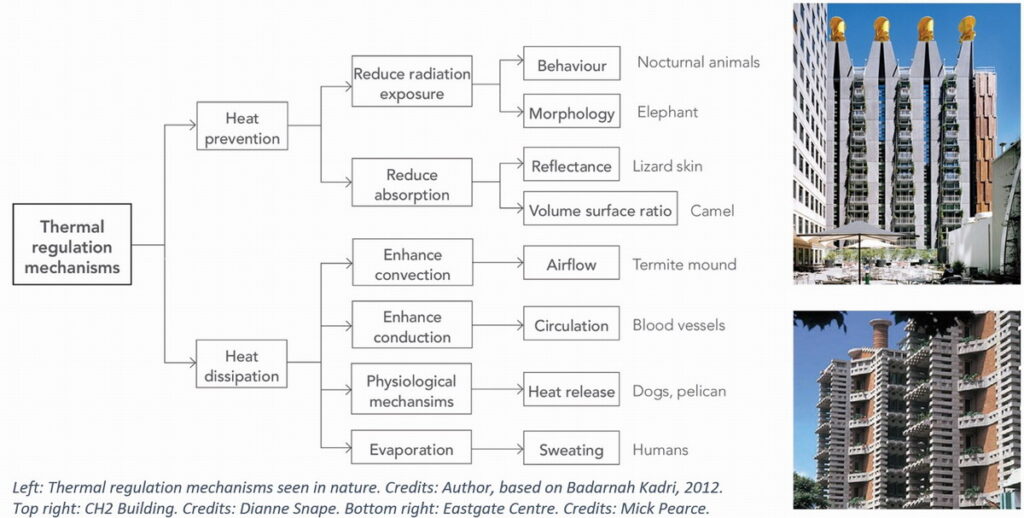
Traditionally, Indian architecture has been characterised by low-rise buildings, optimal shading and ventilation, and materials suited to the local climate. However, urbanisation today is driven by a desire for shiny steel-and-glass skyscrapers and wide highways —a development ill-suited to most Indian climates. Cities across the country are grappling with rising temperatures and increasingly frequent heat waves. To maintain indoor thermal comfort, most buildings rely on energy-intensive air-conditioning. According to the International Energy Agency, India is projected to have the second-largest stock of air conditioners globally by 2050. The sharp increase in air-conditioning units in recent years is already straining the electrical grid during peak hours. The heat released to the outdoors by these air-conditioning systems also contributes to the urban heat island effect.
Thermally efficient building design can substantially reduce, if not eliminate altogether, reliance on air conditioning. Buildings can be designed to better withstand extreme heat by drawing on strategies evolved by organisms to survive high temperatures. ‘Biomimicry’ is the emulation of strategies seen in the living world as a basis for design. Mimicry is not direct copying but rather the interpretation and adaptation of biological functions. Architects worldwide have utilised nature-inspired strategies in buildings to maintain indoor thermal comfort and reduce space cooling loads. Notable examples include the CH2 in Melbourne, where the building envelope has been designed as a protective ‘skin’ inspired by plants, featuring a kinetic facade and openings that respond to the sun’s direction and intensity. A low-energy stack ventilation system cools the office spaces during the day, and an integrated passive ventilation system flushes out accumulated heat at night, capitalising on the diurnal temperature swings to drive air movement. The Eastgate Centre in Zimbabwe is another example, where the building’s ventilation system is derived from wind tunnels found in termite mounds that vent out heat. A high thermal mass and self-shading exterior further prevent excessive heat gain, inspired by cacti’s skin.
Commercial buildings — typically fully air-conditioned and occupied throughout the day — are very energy-intensive. They are ideal for adopting such building-level thermoregulation strategies, as they have a central control system with regular day-night operation and a similar building typology. Modulating building form and orientation to reduce solar heat gain is an effective strategy for all building types and climates. In Maharashtra, coastal areas with a hot, humid climate can utilise cross-ventilation through permeable designs and dehumidification measures, while the hot, dry interior regions can employ insulation, night flushing, and evaporative cooling.
There is a need to rethink urban architecture’s approach to climate resilience and responsiveness to local climate conditions, and biomimicry is just one possible solution. Energy efficiency and innovation must be incentivised through nationally mandated building codes and green rating systems, and the financial benefits of such measures should be effectively conveyed. Through advancements in design and technology, there is potential to fully realise buildings that are truly adaptive to environmental challenges.
Disclaimer: The views expressed in this piece are those of the author/s and do not necessarily reflect the views or policies of AIDMI.
