

Search
Or hit enter to search
By Sanjaya Bhatia, Head of Office Incheon, UN Office for Disaster Risk Reduction (UNDRR), Republic of Korea
Disaster risk reduction is critical for safeguarding lives, infrastructure, and economic stability. However, one of the most persistent barriers to effective DRR implementation is the lack of training among city and other government officials. Without proper education and access to practical tools and methodologies, governments remain vulnerable to disasters, unable to adopt best practices or make informed, risk-aware decisions. This article explores how education and training can be powerful tools for building community awareness and enhancing resilience.
A key hypothesis underpinning recent research is that enhancing resilience requires a renewed and strategic focus on training government personnel. The absence of such training has left governments underprepared, exposing both citizens and local economies to increased risk. Moreover, a critical gap exists in both research and practice regarding training as a driver for resilience.
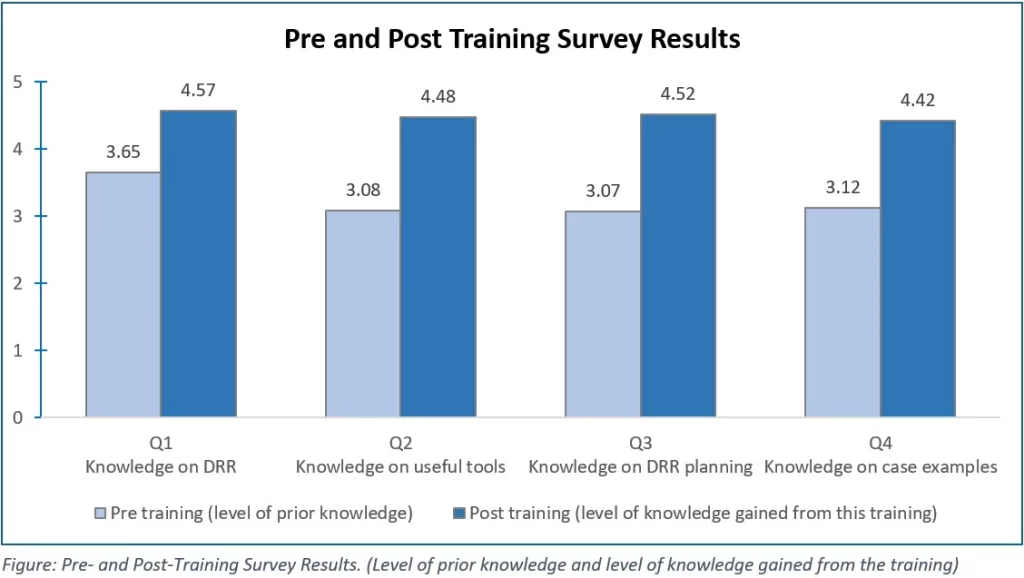
In response to this gap, a comprehensive training program was rolled out in 2023-24 by UNDRR involving 308 city officials. Participants completed pre- and post-training surveys assessing their knowledge of DRR principles, tools, planning methodologies, and best practices. Each survey included six questions rated on a 1–5 scale, with 1 indicating strong disagreement and 5 indicating strong agreement.
The findings were significant. Before training, participants displayed moderate awareness of DRR principles (average score: 3.65), but showed lower understanding of tools, methodologies, and real-world examples (average: 3.09). Post-training scores, however, increased dramatically across all categories—ranging from 4.42 to 4.57. This represented an average knowledge gain of over 25%, with some areas—like planning methodologies and tools—improving by more than 45%.
This notable improvement highlights how well-structured, practical training can close key knowledge gaps. For instance, the understanding of DRR tools increased by 45%, suggesting that many officials were previously unaware of the resources available to them. Similarly, familiarity with planning processes improved by 47%, underscoring the need for actionable guidance over abstract theory.
Learning from case studies was another area with a large gain (42%), underscoring the value of exposure to real-world successes and failures. These shared experiences reduce the need for governments to “reinvent the wheel” and encourage cross-learning between governments.
Crucially, increased knowledge correlates with better risk-informed decision-making, a cornerstone of sustainable development. Participants overwhelmingly indicated that practical, application-oriented training was more beneficial than theoretical content. This preference signals a need to reframe how DRR education is delivered, emphasising usability, local context, and strategic planning.
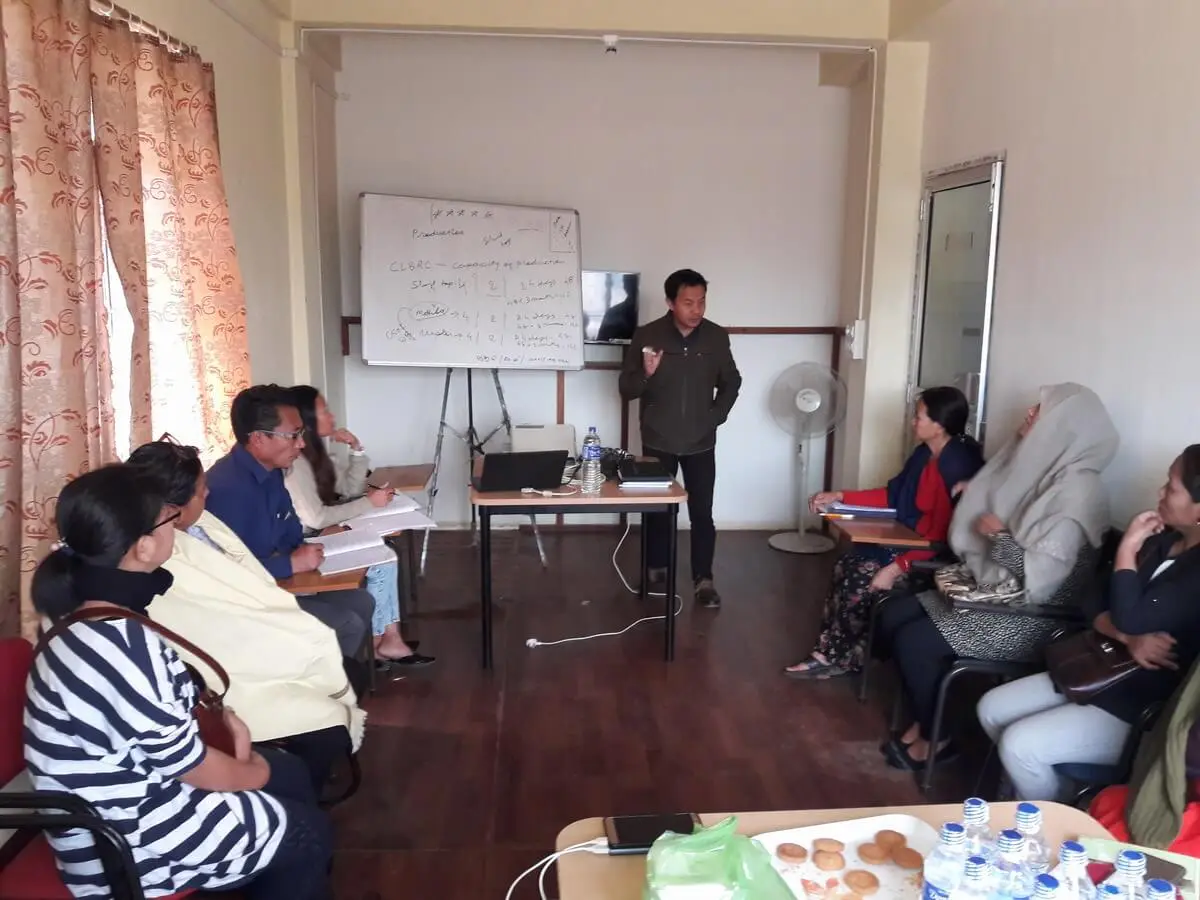
The results strongly support the initial hypothesis: training is not just helpful but essential. It builds individual capacity and institutional resilience, making communities safer and better prepared. Training was co-delivered in Nagaland for urban leaders and practitioners in July 2025, in collaboration with the State Disaster Management Authority and others, with similar results. The outcomes of this workshop are awaited, but initial results are encouraging.
In conclusion, lack of training remains a significant barrier to disaster risk reduction, but it can be overcome. A strategic, systematic approach to training officials can build resilient communities capable of anticipating, mitigating, and responding to disaster risks. Investing in education and knowledge transfer is not just a support function; it is central to building safer, smarter communities.
Disclaimer: The views expressed in this piece are those of the author/s and do not necessarily reflect the views or policies of AIDMI.
