

Search
Or hit enter to search
By Sujata Saunik, Former Chief Secretary, Maharashtra State Disaster Management Authority, Government of Maharashtra, India; and Mihir R. Bhatt, All India Disaster Mitigation Institute (AIDMI), India
Maharashtra stands at the frontline of India’s heat crisis. In 2025, the state faces a confluence of rising temperatures, erratic rainfall, and prolonged dry spells that threaten lives and livelihoods across both rural and urban landscapes. From the cotton belts of Jalgaon and Beed to the dense urban wards of Nagpur and Mumbai, the impact of extreme heat is no longer episodic—it is structural and accelerating each year.
This issue of Southasiadisasters.net titled “From Heatwaves to Cooling Futures: Maharashtra’s Leadership in Climate Action in India” captures Maharashtra’s evolving leadership in addressing extreme heat through science-based, locally led solutions. The contributions in this edition—ranging from reflective cool roofs and biomimicry in architecture to ocean-informed cooling and nature-based approaches—demonstrate the breadth of innovation emerging across the state. And there are many many more such innovations across Maharashtra.
| “Extreme heat is now a development issue for Maharashtra—affecting health, livelihoods, and dignity. Maharashtra’s leadership shows that resilience can be built when local innovation meets public commitment.” |
The All India Disaster Mitigation Institute (AIDMI), in collaboration with the International Institute for Environment and Development (IIED), has contributed to this transformation through field-based research and community action. The joint 2024 study, Building Resilience for Cotton Farmers in India: Evidence from Gujarat and Maharashtra (IIED, 2024), documented how smallholder farmers—particularly women—are responding to extreme heat by diversifying crops, adopting water-efficient practices, and participating in community-managed Livelihood Resilience and Recovery Funds. These local financing mechanisms allow rapid, peer-assessed loans that help households recover without falling into debt.
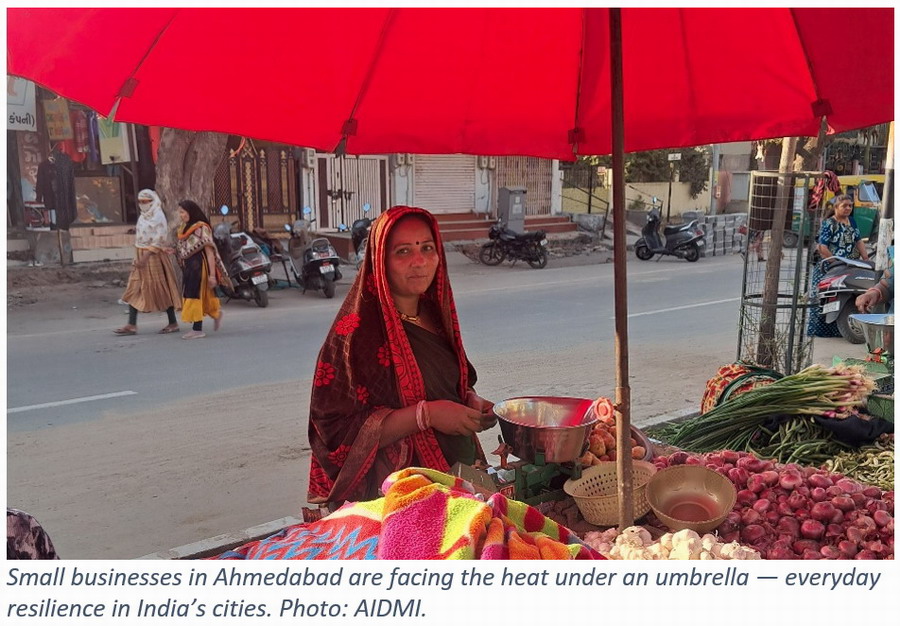
AIDMI’s ongoing engagement in Maharashtra—with farmer-producer organisations, Panchayats, and DDMAs—bridges research with action. Its work supports the rollout of district heat action plans, promotes anticipatory finance for smallholders, and pilots affordable cooling technologies such as solar drying sheds, shaded market zones, and cool storage for cotton and perishable goods. Together, these actions underscore Maharashtra’s growing recognition that cooling is not a luxury but a lifeline for its citizens — integral to human health, productivity, and equity, all of which lead to peace.
