

Search
Or hit enter to search
By Dr. M. Krishnaveni, Director, and Dr. R. Sangeetha, Project Scientist; Institute for Ocean Management, Anna University, Chennai, Tamil Nadu, India
Climate induced extreme heat in the ocean, marine heatwaves, exerts profound and multifaceted impacts on marine ecosystems, biodiversity, and human societies. The prolonged periods of anomalously high sea surface temperatures cause mass mortality events among key marine species, such as corals, seagrasses, and economically important fish, trigger widespread coral bleaching, and facilitate the proliferation of invasive species and harmful algal blooms. Furthermore, marine heatwaves exacerbate ocean deoxygenation and acidification, compound the intensity of tropical cyclones, and disrupt regional climate patterns, including monsoon dynamics, thereby threatening water and food security on a broader scale. Sea surface temperature has risen at an average rate of 0.14°F (0.08°C) per decade from 1901 to 2023, with the fastest increases in the past 40 years.
Footprints on the Society
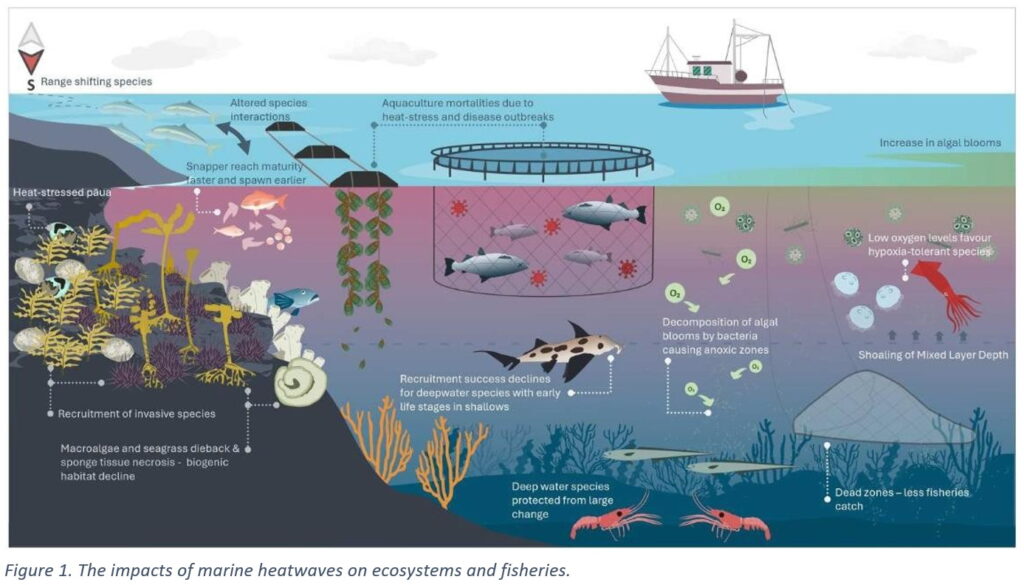
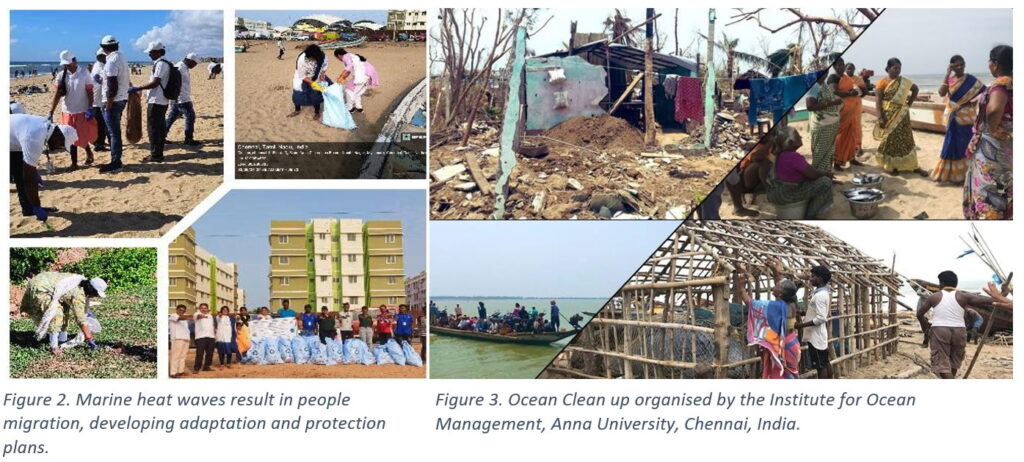
The marine heatwaves result in loss of foundational habitats, leading to ecosystem restructuring, diminished biodiversity, and the collapse of fisheries, with cascading socioeconomic consequences for coastal communities reliant on marine resources (Figure 1). It also disrupts ecosystem services like coastal protection, carbon sequestration, and nutrient cycling, increasing vulnerability to storms, flooding, and erosion. Socially, communities face food insecurity, job losses, and displacement, while harmful algal blooms triggered by warmer waters pose direct health risks through contaminated seafood and water exposure. (Figure 2). The resultant loss of foundational habitats leads to ecosystem restructuring, diminished biodiversity, and the collapse of fisheries, with cascading socioeconomic consequences for coastal communities reliant on marine resources. Globally, marine heatwaves have caused direct losses of over $800 million per event and indirect losses exceeding $3.1 billion.
Building Ocean Resilience
Strengthening ecosystem resilience gives environments and their inhabitants the best chance of surviving warmer seas. Ecosystems become more adaptable to temperature spikes when runoff, plastic waste, and chemical pollutants are reduced because they put less stress on marine life. To stop excessive heat warming our oceans at the root, we need to cut greenhouse gas emissions, but it will take a while for the effects of decarbonisation to show. Therefore, measures like reducing pollution, protecting, restoring and increasing key habitats like kelp forests, mangroves, and seagrass meadows can help mitigate the risks of marine heatwaves. Atmospheric carbon is captured by coastal mangroves, seagrasses and salt marshes at a rate five times faster than tropical forests. “Having a large bank of a healthy ecosystem is still an insurance policy for us”. Adopting green technologies like energy-efficient and low-emission maritime transport and coastal industries can further reduce the ocean’s heat burden and overall carbon footprint. Regular ocean clean-up activity is carried out by the Institute for Ocean Management, Anna University, Chennai. (Figure 3)
Creating Cool Spots in the Coastal Zone
Deploying systems that pump cooler, deeper ocean water to the surface around coral reefs, creating a localised “refrigeration system” to prevent coral bleaching and protect reef ecosystems during marine heatwaves. Installing floating or anchored shading structures above vulnerable coral reefs to reduce sunlight exposure and help lower water temperatures, giving corals a better chance to survive extreme heat events. Create “cool islands” in coastal cities using urban greening, reflective surfaces, and misting systems to lower temperatures and reduce heat stress for both people and nearby marine environments. By incorporating adaptive architecture, such as self-shading buildings and reflective materials, it can reduce urban heat and limit the transfer of extreme heat from land to adjacent coastal waters.
Disclaimer: The views expressed in this piece are those of the author/s and do not necessarily reflect the views or policies of AIDMI.
