

Search
Or hit enter to search
By Laasya Khandavalli, Tyler Center for Global Studies, Austin
The ongoing climate change discussion is filled with scientific opinions, adaptation rigidity, and predictable uncertainty. In many ways, it demands a restructured approach to scientific processes that incorporates interdisciplinary frameworks to address current problems. However, it often excludes those who endure this mind-numbingly complex global phenomenon in concrete, visible ways.
While it is helpful to understand and evaluate Western climate change aspiration strategies in comparison to those of Lower Middle Income Countries (LMICs), it is important to understand that the lived experiences of vulnerable communities in LMICs are vastly different and often severely misunderstood. Shifting baselines, public perceptions of temperature increases are beginning to accept them as the new normal, but active strategic responses are key to adaptation. Normalisation without adaptation leads to consequences. An active effort to understand ground-level experiences and community networks can provide a more holistic approach to mitigating the effects of climate change.
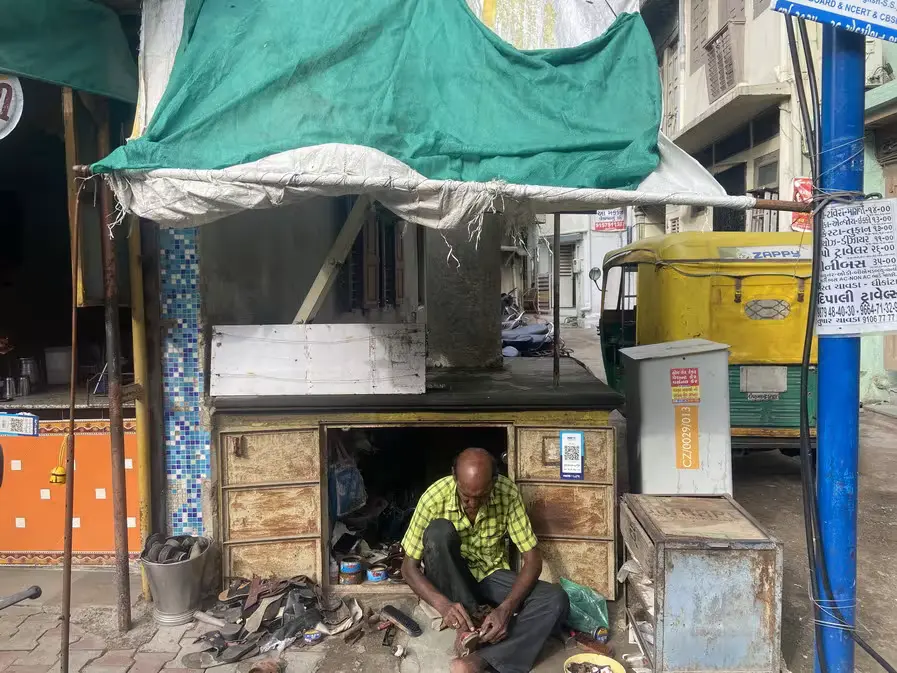
Along with focusing on local organisations, NGOs, and scientific accounts, AIDMI has connected with the people most directly involved and affected by global climate change. In this issue, individual and community-level climate adaptations to extreme urban heat are discussed and evaluated. The narratives presented offer ground-level perspectives of the effects of extreme urban heat on small businesses, families, and community circles.
This issue serves as a platform for the voices of our local community- what they observe, experience, and call for. In combination with scientists, policy drivers, and global experts, the stories and insights of local business owners and workers of a variety of backgrounds and specialisations offer real-world data. It puts the research and metacognitive discussions of natural disaster management into a tangible, real-world context, offering realistic and viable solutions to climate vulnerabilities.
The main message is this: the studies show that extreme heat has already become a severe threat. It has already been known to those on the ground level. They know and experience the gaps in policy and infrastructure every day. Here are their frontline stories and what they call for.
| “अत्यंत उष्णतेचा परिणाम धोरणांपेक्षा आधी जमिनीवर काम करणाऱ्या लोकांना जाणवतो. त्यांच्या अनुभवांशिवाय कोणतेही उपाय परिणामकारक ठरू शकत नाहीत.” |
