

Search
Or hit enter to search
By Vishal Pathak, AIDMI, India
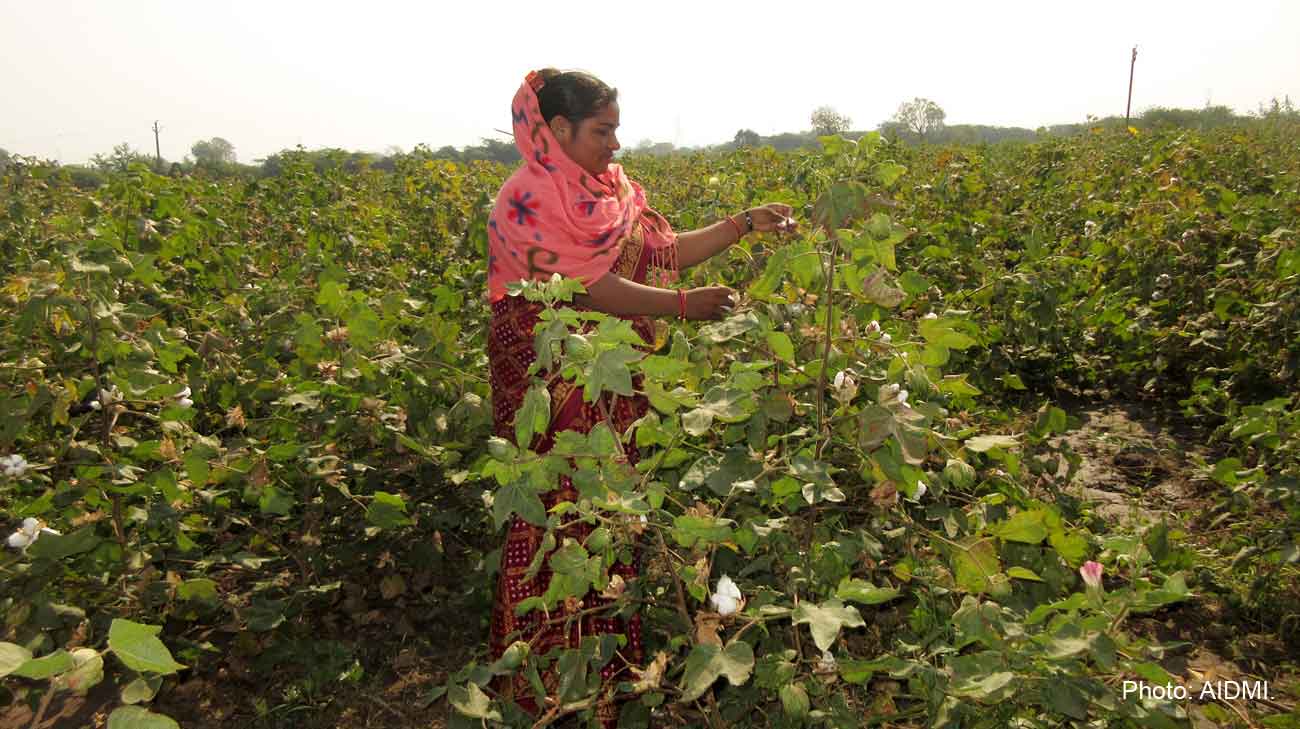
Maharashtra, one of India’s key cotton-producing states, continues to grapple with the intensifying impacts of extreme heat. In 2025, smallholder cotton farmers—especially women—face increasing vulnerability due to rising temperatures, longer dry spells, and more frequent heatwaves. These conditions have contributed to significant crop losses, exacerbating the socioeconomic fragility of rural households that depend on agriculture.
A recent study[1] IIED and AIDMI reveal that nearly 84% of cotton farmers in Maharashtra perceive a sharp increase in average temperatures over the last five years. Heatwaves are now an almost annual occurrence, with over half of the surveyed farmers reporting complete or major crop losses due to droughts and floods, which are further exacerbated by erratic rainfall. This heat-induced stress not only affects crops but also reduces milk yield, impacts children’s nutrition, and increases health-related expenditures.
Despite the growing threat, adaptive cooling measures remain limited. Few farms have access to irrigation—only about 50%—making them particularly vulnerable to heat and water scarcity. As a coping strategy, farmers often resort to savings, borrowing, or reducing household expenditures, such as withdrawing children from private education or avoiding healthcare costs. However, these measures are reactive and not sustainable in the long term.
Adaptation efforts such as crop rotation, intercropping, and tree planting are practised by many farmers. These methods not only improve soil health but also act as natural buffers against extreme weather. Yet, economic cooling mechanisms like crop insurance remain underutilised. While uptake in Maharashtra is relatively higher than in other states—driven by the national PMFBY scheme—farmers still face challenges related to affordability, limited awareness, and bureaucratic hurdles in the claims processing process.
In response to these growing challenges, the Government of Maharashtra has stepped up its heat-related planning and interventions. Through the State Climate Change Action Plan (SAPCC), the state has prioritised extreme heat management, with special provisions for climate-resilient agriculture. District Disaster Management Authorities (DDMAs) in hotspot districts have begun incorporating heatwave risk into their seasonal planning, with support from the state’s Department of Agriculture. In addition, the Maharashtra State Disaster Management Authority (MSDMA) is coordinating the rollout of localised Heat Action Plans, modelled on national guidelines, to ensure better early warning, public awareness, and coordination with local health and irrigation departments.
The government has also partnered with civil society and farmer-producer organisations to scale up access to heat-resilient seed varieties and micro-irrigation systems through the PMKSY (Pradhan Mantri Krishi Sinchayee Yojana), as well as to improve farmer advisories via Krishi Vigyan Kendras (KVKs). These advisories include agro-meteorological bulletins and climate-resilient farming tips disseminated through SMS in local languages. Moreover, Mahatma Phule Renewable Energy and Infrastructure Technology (MAHAPREIT) is exploring cooling-as-a-service pilots in rural storage and post-harvest facilities, in collaboration with NABARD and private cooling entrepreneurs.
Community-driven solutions such as the Livelihood Resilience and Recovery Fund offer an alternative model. This fund enables quick, interest-free loans based on peer assessment and has been praised for its responsiveness and accessibility, critical features absent in formal insurance schemes.
Looking ahead, Maharashtra’s approach to cooling must continue integrating infrastructural upgrades (such as affordable irrigation), inclusive insurance products, and localised climate services. Government action must be complemented by stronger awareness campaigns, gender-sensitive interventions, and support for trusted community institutions. State-level convergence across departments—including Agriculture, Energy, Health, and Rural Development—is vital to align heat adaptation efforts under one coordinated resilience framework.
Extreme heat is no longer a seasonal anomaly—it is a structural challenge. Addressing it requires systemic solutions that prioritise environmental, economic, and social resilience at the grassroots. With the combined momentum of state-led policies, civil society innovation, and community action, Maharashtra can chart a path towards a heat-resilient rural future.
[1] Guarin, A., Blackmore, E., Pathak, V., Nicolini, G., Morell-Decos, J. and Kelly, L. (2024). Building resilience for cotton farmers in India: Evidence from Gujarat and Mahrashtra. IIED and AIDMI. https://www.iied.org/22481iied.
