

Search
Or hit enter to search
By Harakh Patel and Vishal Pathak, AIDMI, India
| “The great work that AIDMI is doing to support small businesses to adapt, anticipate, be prepared and manage losses and damages due to extreme heat risks, is a testimony and inspiration to all local, national or international organisations that community-owned and risk-informed climate adaptation actions with a little bit of flexible funding can have a BIG impact! These adaptive measures not only save lives and livelihoods but they also building more resilient communities who are able to adapt to present and future climate shocks. No action is too small; it’s time to act now!”
– Nishanie Jayamaha, Secretariat for the Climate and Environment Charter for Humanitarian Organisations |
Across the world, communities are confronting a growing convergence of risks—extreme heat, climate variability, economic uncertainty, and fragile livelihood systems. These pressures are forcing humanitarian and development actors to rethink how resilience is financed at the community level. Traditional funding models, largely designed for short-term relief or large infrastructure projects, are increasingly proving insufficient to support the everyday adaptation decisions that communities must make to survive climate extremes.
Resilience finance works, when you start with knowledge
One of the clearest lessons emerging from AIDMI’s field experience is that resilience finance works best when it starts with knowledge. Communities consistently show a strong demand for practical information on climate risks and how to respond to them. Orientation on extreme heat risks, interpretation of early warnings, and simple preparedness and anticipatory actions can significantly strengthen community resilience. When people understand the risks they face and the options available to them on how they can act to minimise and face the impacts, even modest financial support can translate into meaningful adaptation. Knowledge therefore multiplies the impact of small investments and helps communities turn warnings into action.
Sustainability = Local Design + Community Ownership
Another key lesson is that community ownership sustains adaptation over time. When local actors—such as small business owners or workers—design their own risk-reduction measures, they are far more likely to maintain and expand them. Locally designed solutions align with daily economic realities, making them practical and affordable. In many cases, once initial measures stabilise livelihoods, community members begin reinvesting their own resources to strengthen resilience further. This cycle of ownership and reinvestment suggests that resilience is not only about financial inputs but also about enabling communities to make informed choices.
Small adaptations, BIG impact
Practical workplace adaptations illustrate how preparedness can grow from small but targeted investments. Measures such as shading workspaces, improving ventilation, adjusting working hours, and linking early warning information to business decisions can reduce exposure to extreme heat. Communities that implement such adaptations often report greater confidence in continuing their livelihoods during heatwaves and other climate stresses. Preparedness becomes not only a safety measure but also an economic strategy that helps prevent income loss during climate extremes.
Flexible financial instruments for better durable solutions
A major insight emerging from resilience initiatives is that financing mechanisms must match the nature of the risks communities face. Slow-onset climate risks such as extreme heat do not always require large-scale infrastructure investments. Instead, they often require flexible, community-level financial instruments—such as micro-grants, seasonal support, or blended advisory and financial assistance. Rigid, short-term humanitarian funding is frequently poorly suited for these gradual yet intensifying risks. Flexible financing, designed around community priorities and timelines, tends to produce more durable results.
Inclusive and resilient financing for better uptake
Equity also plays a critical role in resilience finance. Climate risks and financial access are unevenly distributed, particularly among women entrepreneurs, elderly workers, and persons with disabilities. Inclusive resilience financing, therefore, requires intentional outreach and design. When knowledge and financial support are accessible, vulnerable groups often demonstrate strong initiative in adopting protective measures. Inclusive consultation spaces, targeted support, and accessible training can help ensure that resilience investments reach those who are most exposed to climate risks.
| AIDMIનો અતિશય ગરમી સામે ટકી રહેવાનો કાર્યક્રમ ભારતના 11 શહેરોમાં 2000થી વધુ નાના વ્યવસાયોને લઘુ ધિરાણ, ટેકનિકલ માર્ગદર્શન, અને જોખમ-આધારિત આયોજનના સંયોજન દ્વારા સહાય પૂરી પાડે છે. આ પહેલ શાકભાજી અને ફળ વિક્રેતાઓ, સ્ટ્રીટ ફૂડ વેચનારાઓ, કારીગરો, અને ઘરેલું વ્યવસાયોને ગરમીની સીઝન પહેલા ઓછી કિંમતના ઠંડક અને રક્ષણાત્મક ઉપાયો અપનાવવા માટે સક્ષમ બનાવે છે. આ કાર્યક્રમ આર્થિક સ્થિતિસ્થાપકતા મજબૂત કરવા માટે ‘બ્લેન્ડેડ ફાઇનાન્સિંગ’ અભિગમો પણ તપાસે છે, જેમાં સામુદાયિક યોગદાન અને ઉભરતા જોખમ ટ્રાન્સફર વિકલ્પોનો પણ સમાવેશ થાય છે. આગોતરી ચેતવણીને આગોતરા પગલાં અને સ્થાનિક અનુકૂલન સાથે જોડીને, આ મોડેલ દર્શાવે છે કે કેવી રીતે લક્ષિત રોકાણો નુકસાન ઘટાડી શકે છે અને આજીવિકા ટકાવી રાખવામાં મદદરૂપ થઈ શકે છે.
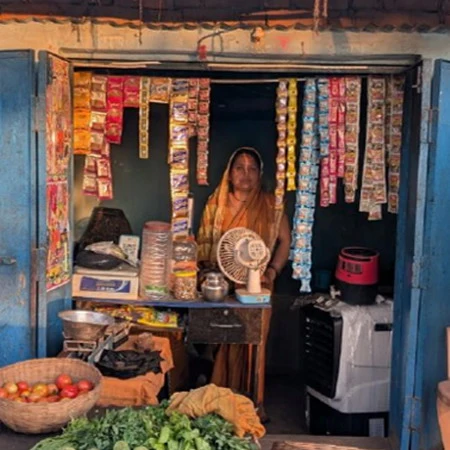
AIDMI’s ongoing programme on extreme heat resilience supports over 2000 small businesses across eleven Indian cities through a combination of small finance, technical guidance, and risk-informed planning. The initiative enables businesses such as vegetable sellers, fruit sellers, and street food sellers, artisans, home-based businesses to adopt low-cost cooling and protective measures ahead of peak heat periods. The programme also explores blended financing approaches, including community contributions, early action support, and emerging risk transfer options, to strengthen financial resilience. By linking early warning with early action and local adaptation, the model demonstrates how targeted, small-scale investments can reduce losses and sustain livelihoods and build resilience among at-risk populations – small businesses. |
The resilience of informal economies leads to a more robust national economy
The implications extend beyond individual communities. Across South Asia and many other regions, informal economies form a major pillar of local livelihoods and contribute significantly to national economies. Small businesses frequently operate on the frontline of climate risks—facing heat stress, water shortages, energy instability, and market disruptions. Strengthening their resilience, therefore, supports not only individual households but also the stability of local and national economies and supply chains.
Scale-up is possible, even in FCAS, when resilience is community-led
Community-level resilience approaches may also offer important opportunities in fragile or conflict-affected settings (FCAS). Because many of these strategies are decentralised, behaviour-focused, and relatively low-cost, they can function even where formal systems are disrupted. Supporting small enterprise adaptation can help stabilise local markets, maintain economic activity, and reduce vulnerability during periods of instability.
What needs to happen next?
Despite these promising approaches, important gaps remain. Scaling successful community resilience models requires better climate risk information, financing instruments that bridge humanitarian and development priorities, and stronger partnerships between local institutions, governments, and private actors. Perhaps most importantly, funding structures must shift from viewing communities as beneficiaries toward recognising them as partners capable of shaping and sustaining resilience.
As climate risks intensify, the question is no longer whether communities will adapt—they already are. The challenge is whether financial systems will evolve quickly enough to support the locally led solutions that are already emerging. Financing resilience at the community level is not only about mobilising more resources; it is about designing the right kinds of support so that small adaptations today can lead to large resilience gains tomorrow.
(The article is based on the presentation and discussion at the panel – Financing and Scaling Long-Term Resilience at Community Level: What Works, What Doesn’t, and What’s Missing – organised by the Climate Charter, ECHO and UNDP jointly at HNPW2026 in March.)
