

Search
Or hit enter to search
“Pilots are where learning begins, and demonstrations are where learning becomes action. Southasiadisasters.net has been both the record and the roadmap for scaling resilience.”
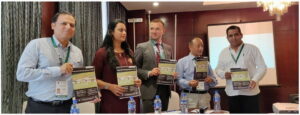
For twenty years, Southasiadisasters.net—the flagship publication of the All India Disaster Mitigation Institute (AIDMI)—has documented how small, field-tested innovations become national and regional models. Each pilot featured in its pages shows how ideas tested at the local level can transform humanitarian practice, disaster risk reduction (DRR), and climate resilience policy. From post-tsunami reconstruction to urban cooling, the publication has chronicled two decades of experimentation that bridged science, governance, and community leadership.
The first major innovation was Afat Vimo, India’s first disaster micro-insurance pilot. Issue 133 (2015), “Disaster Microinsurance: An Innovation for Transformation,” traced how this post-earthquake initiative protected informal workers and small businesses and inspired later parametric insurance pilots for heat risk.
The second was the Ahmedabad Heat Action Plan (HAP). Issue 132 (2015), “Local Level Planning to Cope with Heat Waves in India,” documented how AIDMI, AMC, and IMD co-created the world’s first city-level heat plan. This model, combining early warning, communication, and health preparedness, has since been replicated in more than twenty Indian cities.
Third came District Disaster Management Planning pilots in Assam and Sikkim. Issues 86 (2012) and 115 (2014) showed how participatory district planning strengthened governance and inclusion in hazard-prone areas, later shaping national DDMP guidelines.
Fourth, School Safety and Education Resilience demonstrations captured in Issue 49 (2008) proved that disaster drills, classroom training, and safety audits could reduce risk for children. These pilots informed NDMA’s School Safety Policy 2016.
Fifth were Urban Resilience and City Action Planning pilots, featured in Issue 114 (2014), which trained city managers in resilient infrastructure, land-use planning, and local adaptation—concepts that later influenced India’s Smart Cities Mission.
The sixth innovation, a Community-Based Flood Early Warning System in Assam, appeared in Issue 183 (2019). Using low-cost sensors and mobile alerts, it showed how technology and local institutions can save lives in remote areas.
Seventh, Humanitarian Accountability and Localisation pilots reported in Issue 76 (2011) tested Sphere and HAP standards in Odisha and Gujarat. They established community feedback systems long before localisation became a global humanitarian priority.
Eighth, Women-Led Climate and Disaster Resilience pilots, highlighted in Issue 197 (2022), chronicled AIDMI’s partnership with SEWA in Gujarat, Bihar, and Rajasthan, where women organised for heat preparedness, flood management, and livelihood recovery.
Ninth, Nature-Based Cooling Solutions for Cities, featured in Issue 224 (2025), demonstrated green corridors, reflective surfaces, and water-sensitive design in Ahmedabad and Kochi—linking local adaptation to IUCN’s global NbS agenda.
Finally, Issue 215 (2025), “Climate Extremes: Pathways for Preparedness and Anticipatory Action,” showcased Forecast-Based Financing pilots in Gujarat and Odisha. These introduced pre-arranged funds and community triggers for heat and flood response, aligning with the UN’s Early Warning for All initiative.
Across these ten examples, Southasiadisasters.net has shown how pilots move from innovation to institution. Each demonstration—whether in school safety, micro-insurance, or urban heat adaptation—turned evidence into policy and practice. AIDMI’s participatory approach, combining data, training, and community ownership, ensured that small pilots yielded national impact.
As India and South Asia advance toward 2030, these experiments remain living laboratories of resilience—proving that innovation thrives when it is local, inclusive, and documented for others to learn from.
