

Search
Or hit enter to search
By J Cathrine, Maritime Research Center, Pune, India
In 2025, India is experiencing unprecedented heat, highlighting the intensifying impacts of climate change. The India Meteorological Department (IMD) issued its first heatwave alert on April 7, forecasting above-normal temperatures from April through June. February was the hottest in 125 years, with an average mean temperature of 22.04°C and rainfall less than half the usual levels. Between February 11 and 23, thirty-one states and union territories recorded night-time temperatures above normal, with many regions exceeding typical values by 3 °C to 5 °C. These patterns align with projections from the Intergovernmental Panel on Climate Change (IPCC), which anticipates more frequent and severe heatwaves in India.
Extreme heat poses significant threats to health, livelihoods, and ecosystems. High temperatures contribute to heatstroke, dehydration, cardiovascular and kidney disorders, and mental health strain, particularly among outdoor workers, the elderly, and women in agrarian communities. Heatwaves exacerbate water scarcity, reduce soil moisture, and impact agricultural productivity, livestock, and fisheries. Food security, biodiversity, and public health are directly affected. While Heat Action Plans (HAPs) address emergency responses, they remain insufficient for mitigating systemic vulnerabilities or long-term climate risks.
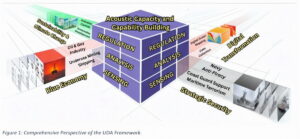
Addressing these challenges requires strategies that harness the ocean’s cooling potential. Marine Spatial Planning (MSP) and Underwater Domain Awareness (UDA) provide integrated frameworks capable of long-term heat adaptation. MSP offers governance to balance ecological integrity with development. It enables the restoration of mangroves, seagrasses, and coral reefs, enhancing natural cooling, buffering urban heat, and increasing carbon sequestration. MSP also facilitates sustainable marine renewable energy, such as offshore wind and ocean thermal energy conversion, which can support cooling technologies while reducing greenhouse gas emissions. By guiding coastal urban design and regulating waterfront development, MSP preserves ventilation corridors that mitigate heat stress in densely populated areas.
UDA complements MSP by providing technological and monitoring capabilities to implement interventions effectively. Acoustic and oceanographic mapping allows real-time assessment of thermal stress, salinity, and ecosystem health in coastal waters. This information enables early prediction of marine heatwaves and their impacts on fisheries, agriculture, and urban heat. UDA also informs underwater noise regulation to protect ecosystems and maintain natural cooling functions. Digital twins of coastal environments enable the simulation of interactions between marine and terrestrial heat events, optimising infrastructure placement, such as seawater air-conditioning systems, with minimal ecological disruption.
The integration of MSP and UDA creates a robust system in which governance and environmental intelligence reinforce each other. Conventional HAPs address immediate heat impacts but fail to mitigate underlying drivers. Ocean-informed cooling strengthens resilience by integrating land- and marine-based strategies, safeguarding vulnerable communities, and promoting sustainable economic activity. It also aligns with India’s Sustainable Development Goals, particularly climate action, sustainable cities, and life below water, while incorporating Environmental, Social, and Governance (ESG) principles for climate-smart investment.
Ocean-informed cooling through MSP and UDA represents a paradigm shift in climate adaptation. By leveraging the ocean as an active regulator of heat, we can implement a scientifically grounded, socially equitable approach to extreme heat. This integrated model positions the state as a leader in climate-smart governance within the Indian Ocean Region, offering lessons for other coastal areas confronting rising temperatures, ecosystem stress, and socio-economic vulnerability.
References
Disclaimer: The views expressed in this piece are those of the author/s and do not necessarily reflect the views or policies of AIDMI.
