

Search
Or hit enter to search
By Piyush Poddar, Lead-Programmes, Martha Farrell Foundation, New Delhi, India
To escape the unbearable summer heat in Delhi, a woman domestic worker began carrying wet clothes with her while travelling to work. Another shared that unlike previous years, she could no longer sleep on the floor during summer nights because the heat trapped inside her one-room house had become unbearable. In another instance, a domestic worker had to purchase an additional fan to cope with rising temperatures, increasing household expenses without any corresponding increase in family income.
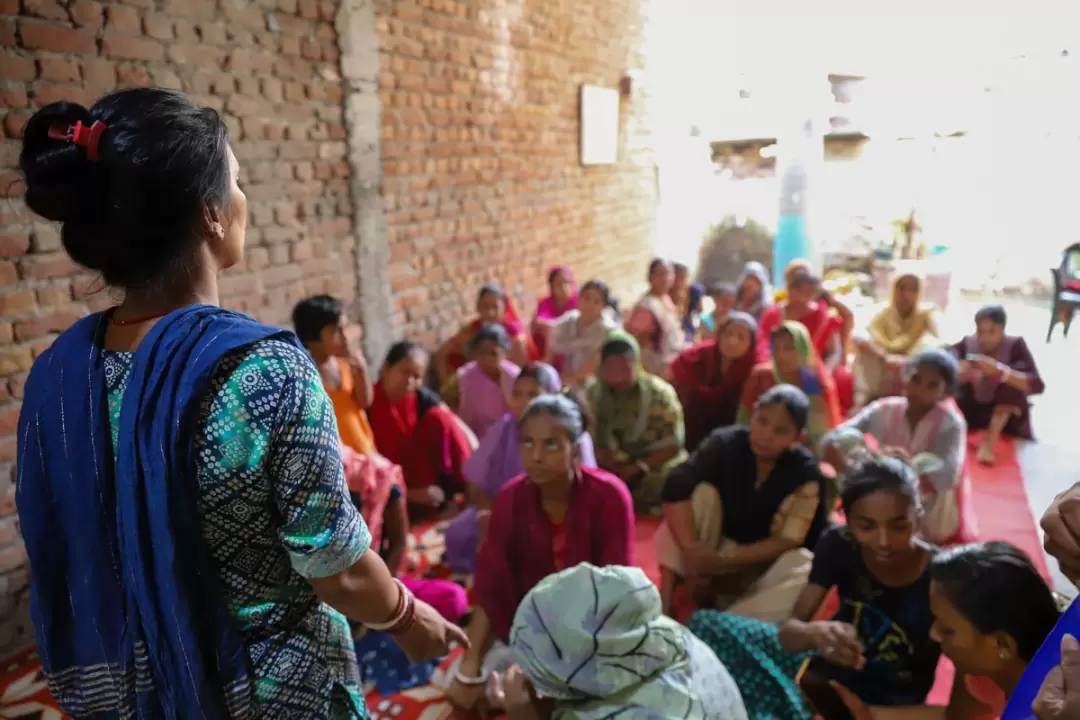
The Martha Farrell Foundation, an organisation working on issues of safety and gender based violence in Delhi and Haryana, conducted a participatory study with 200 women domestic workers and 80 adolescents in four areas of Delhi namely Noornagar, Jasola Vihar and Taimoornagar in South-East Delhi, and Mukherjee Nagar in North Delhi, to understand the impact of excessive heat on their lives. Through community discussions, collective reflection and lived experiences, women documented how climate stress was reshaping their daily realities.
The study found that rising temperatures have increased household electricity consumption, leading to higher utility expenses without a corresponding increase in wages, thereby reducing the net incomes of domestic workers. Women also reported an erratic and lower water supply, which increased their burden as the key providers of household water needs. In some cases, women lost working hours waiting for water and adolescent girls had to skip school to fetch and store water. To cope with excessive heat, domestic workers reported placing wet clothes on their bodies while cooking or sleeping to stay cool. However, this frequently resulted in rashes and other health concerns, adding to their out-of-pocket medical expenses. The lived realities of women domestic workers reveal dimensions of climate vulnerability that are often absent in technical discussions on urban resilience. In Taimoornagar one participant reflected, “There are more fights at home during heat waves, as more heat means more anger.”
In the communities where the study was conducted, women have formed solidarity groups to collectively respond to the impacts of climate stress and other forms of injustice. These groups, consisting of nearly 80–100 women, act as first responders in cases of violence, support women in demanding fair wages and create collective support systems within their settlements. In response to rising household expenses, women domestic workers have collectively negotiated with employers for salary increases that reflect the growing cost of living. To address water shortages, women’s collectives have written letters and met municipal authorities and elected representatives to demand a regular and predictable water supply. In one such effort in Mukherjee Nagar in North Delhi, sustained engagement resulted in water tankers arriving on time and in multiple batches. The collectives have also raised awareness and concerns regarding the unequal burden of climate impacts on women and girls. Through regular meetings, participatory activities women have documented local challenges and identified collective solutions.
While climate justice is often discussed globally in terms of historical emissions and responsibility, it must also be understood through its unequal impact on vulnerable communities. The experiences of domestic workers and adolescents living in informal settlements like Taimoornagar are equally important forms of climate evidence. Yet their experiences rarely shape urban climate planning. Participatory research becomes important in this context because it allows communities to become producers of knowledge rather than passive recipients of policy decisions. The lived realities of women domestic workers reveal dimensions of climate vulnerability that are often absent in technical discussions on urban resilience.
As cities develop Heat Action Plans and urban resilience strategies, communities most affected by climate stress must not remain excluded from decision-making processes. As the climate changes, urban responses must also change, from top-down approaches to people-centred resilience rooted in lived experiences.
Reference: Martha Farrell Foundation. (2024). Unseen and unprotected: How extreme weather events affect the work and dignity of women domestic workers and their children. https://www.marthafarrellfoundation.org/uploads/article_category/1728626287_Unseen_and_Unprotected_A%20study_on_impact_of_climate_change.pdf
Photo caption: Community leader from Taimoornagar in South-East Delhi facilitating a discussion with women domestic workers to understand the impacts of climate change
Disclaimer: The views expressed in this piece are those of the author(s) and do not necessarily reflect the views or policies of AIDMI.
