

Search
Or hit enter to search
By Mihir R. Bhatt, All India Disaster Mitigation Institute (AIDMI), India[1]
The Urban Heat Island (UHI) effect is a growing concern in cities across India, where urban areas experience significantly higher temperatures than their rural surroundings due to dense infrastructure, fuel-based industrial manufacturing or transport, limited vegetation, and heat-absorbing materials such as concrete and asphalt.
As climate change intensifies, extreme heat events are becoming more frequent and severe, posing serious risks to life, livelihoods, public health, infrastructure, and overall urban livability.
To mitigate the UHI effect, cities must implement a combination of local nature-based, technological, and policy-driven solutions at large scale.
Cool and Reflective Urban Surfaces
Traditional urban surfaces like asphalt and dark rooftops absorb and retain heat, exacerbating the UHI effect. Replacing these with cool roofs and cool pavements—materials designed to reflect more sunlight and absorb less heat—can significantly reduce surface temperatures.
White or light-coloured roofs, for instance, reflect solar radiation and can decrease indoor temperatures, lowering energy demands for cooling. Similarly, permeable pavements not only reflect heat but also reduce surface runoff, helping manage urban flooding.
Such transformation of surfaces can generate new skills and employment.
Green Technological Innovations for Heat Mitigation
Emerging technologies offer new opportunities to cool urban heat. Smart sensors and real-time heat mapping allow cities to monitor temperature variations and identify hotspots.
Advanced cooling technologies, such as passive cooling systems and heat-resistant building materials, working with solar or wind or other renewable energy, can further improve urban climate resilience.
The integration of renewable energy sources, particularly wind and solar-powered cooling solutions, can help offset the increased energy demands caused by rising temperatures.
| India’s cities must urgently address the Urban Heat Island (UHI) effect—a key driver of rising urban temperatures—by implementing nature-based, technological, and policy-driven cooling solutions at scale. |
Water-Based Cooling Solutions
Water plays a crucial role in heat mitigation. Incorporating water bodies, fountains, and urban wetlands helps cool the surrounding environment. Encroached up on city lakes and ponds and re-generating riverbeds are a way ahead to cool cities.
Cities can also implement sustainable water management practices such as rain gardens, bioswales, and retention ponds to mitigate heat while also improving stormwater management.
Urban planning strategies that increase access to shaded waterfront areas can create natural cooling zones for residents.
Community-Based and Policy-Driven Mitigation Approaches
Addressing the UHI effect requires collaboration among city planners, policymakers, businesses, academics, and communities. Local governments should implement policies that incentivise green roofs, reflective materials, and urban forestry programs. Community involvement is equally essential—not only in adopting adaptive practices but also in actively contributing to climate data generation.
Citizen-led temperature monitoring offers an inclusive, low-cost approach to track urban heat at the neighbourhood level. Platforms that allow civil society organisations and individuals to upload local temperature data can improve the granularity and responsiveness of heat mitigation strategies. Such models have been successfully piloted in Australia, where the Royal Melbourne Institute of Technology (RMIT University), in collaboration with local councils and communities, has implemented participatory heat-mapping initiatives. These projects empower residents to become co-producers of knowledge while informing municipal heat adaptation plans.
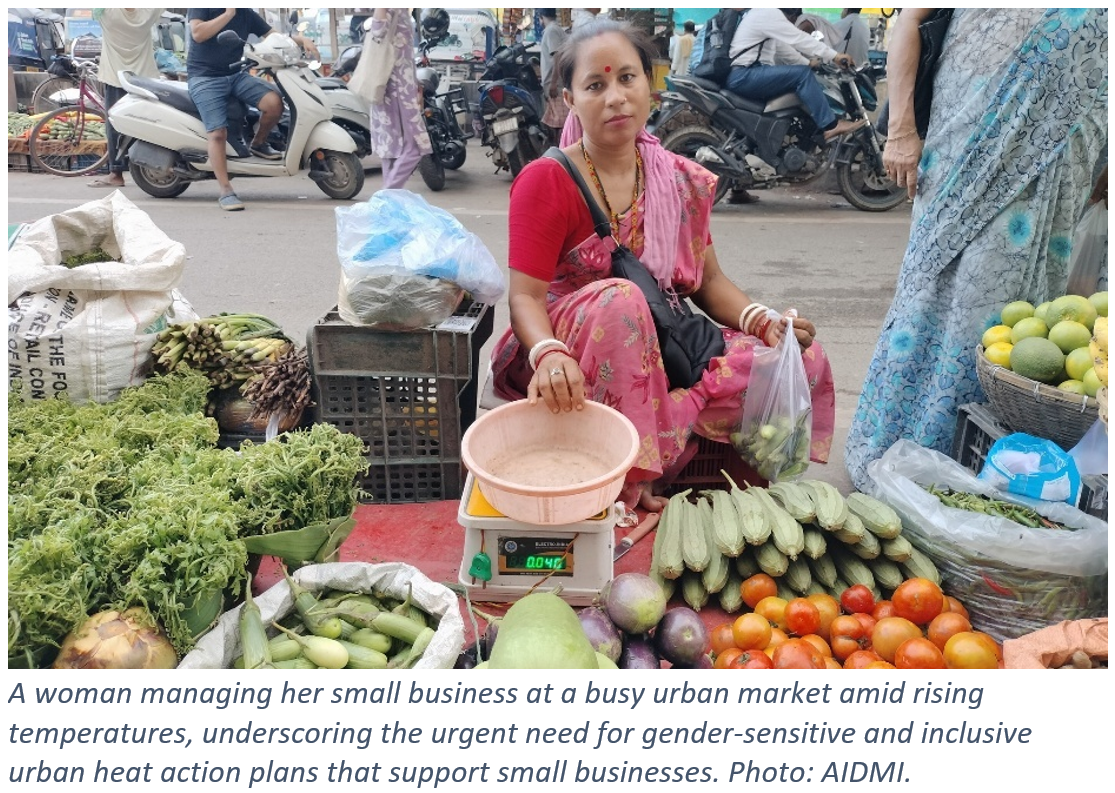
Heat action plans, early warning systems, and public awareness campaigns can educate communities about heat risks and adaptive measures. Cooling business plans, early warning, and related actions add to urban cooling. Governments can also support low-income communities—often the most vulnerable to extreme heat—by providing water sources, cooling centres, subsidies for home insulation, and access to affordable cooling technologies.
Green Infrastructure and Urban Forestry
Expanding green spaces such as parks, green roofs, and tree-lined streets is one of the most effective ways to reduce urban heat. Vegetation provides shade, absorbs heat, and cools the air through evapotranspiration.
Urban tree-planting initiatives—horticulture, floriculture, forest, and other varieties—can significantly lower local temperatures while improving air quality and enhancing biodiversity.
In addition, vertical gardens and green walls in densely built areas can contribute to cooling while maximising space usage.
These measures cannot be taken overnight, but with a five-year plan, such initiatives can take root and in fact, generate green skills, assets, and jobs.
Heat Smart Urban Design and Planning
Cities can be designed or re-designed to promote natural ventilation and reduce heat retention.
Implementing shaded walkways, using high-albedo materials for buildings and roads, and designing compact yet well-ventilated urban layouts can help mitigate heat accumulation.
Heat smart city layouts with open spaces and wind corridors allow air to circulate, reducing trapped heat.
In addition, integrating climate-responsive building designs—such as insulated walls, cross-ventilation, adequate plantation, suitable water bodies, and energy-efficient construction—can lower indoor temperatures.
Conclusion
Mitigating the urban heat island effect in India requires a multifaceted approach that combines natural solutions, technological advancements, and community-driven policies.
By prioritising green infrastructure, sustainable urban planning, water management, and heat-resilient design, cities can create cooler, more livable environments.
As climate change continues to exacerbate heat-related challenges, proactive and inclusive strategies will be essential in ensuring urban heat resilience and safeguarding public health in India’s cities.
[1] Presented at National Workshop on Proactive Heatwave Response: Charting a Path for Anticipatory Action and Community Resilience, March 11, 2025. For details on anticipatory actions, be in touch with Jyoti Agarwal at support@aidmi.org or look up AIDMI website (https://aidmi.org/).
