Search
Or hit enter to search
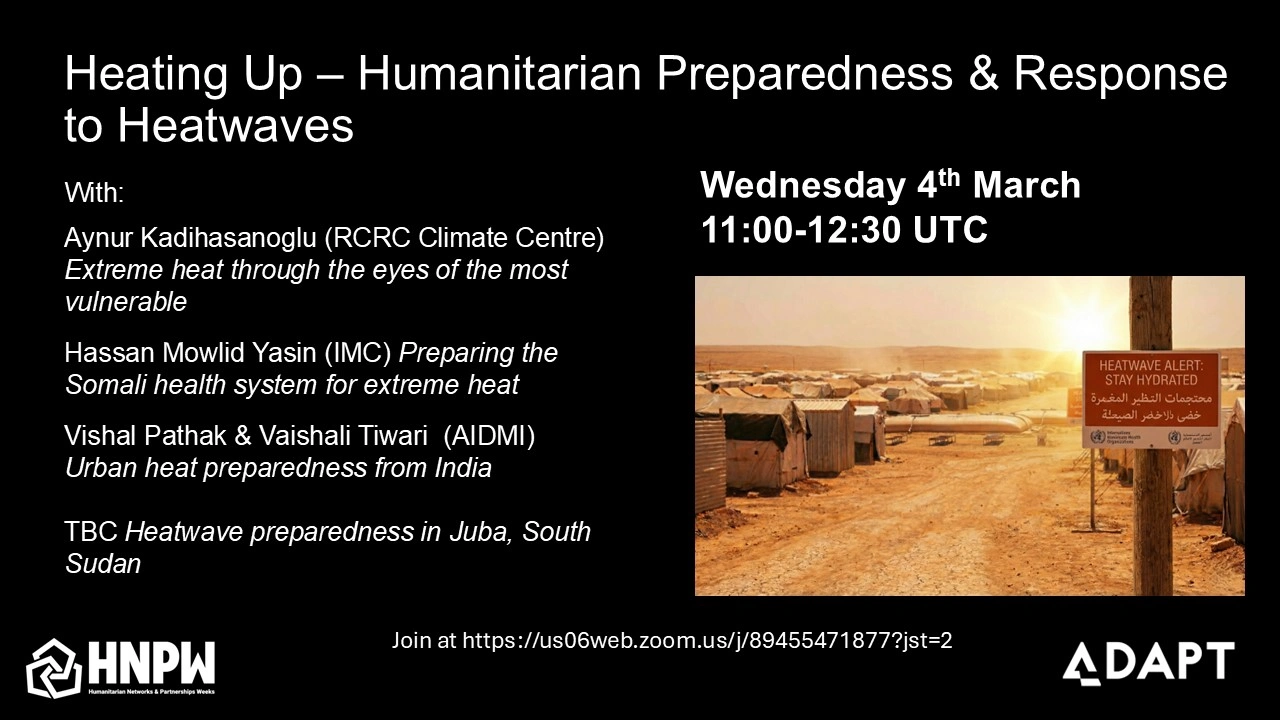
Organizer(s): ADAPT Initiative
📅 Wednesday, March 4, 2026
🕚 11:00–12:30 UTC | 16:30–18:00 IST
Global temperatures were rising, and with them the threat of extreme heat. Periods of extreme heat (or heatwaves) could increase mortality rates by 20–30%, and were increasing rapidly. Between 2000 and 2035, the number of heatwaves was expected to increase by 800%. The populations served by humanitarian operations were often at particular risk. Many humanitarian contexts were located in ‘hot spots’, where the risk of heatwaves was increasing very rapidly. People affected often had limited access to water, healthcare, and adequate shelter. However, there were several—often fairly simple and inexpensive—measures that humanitarian actors could implement to reduce the risk, and a number of agencies were already implementing them.
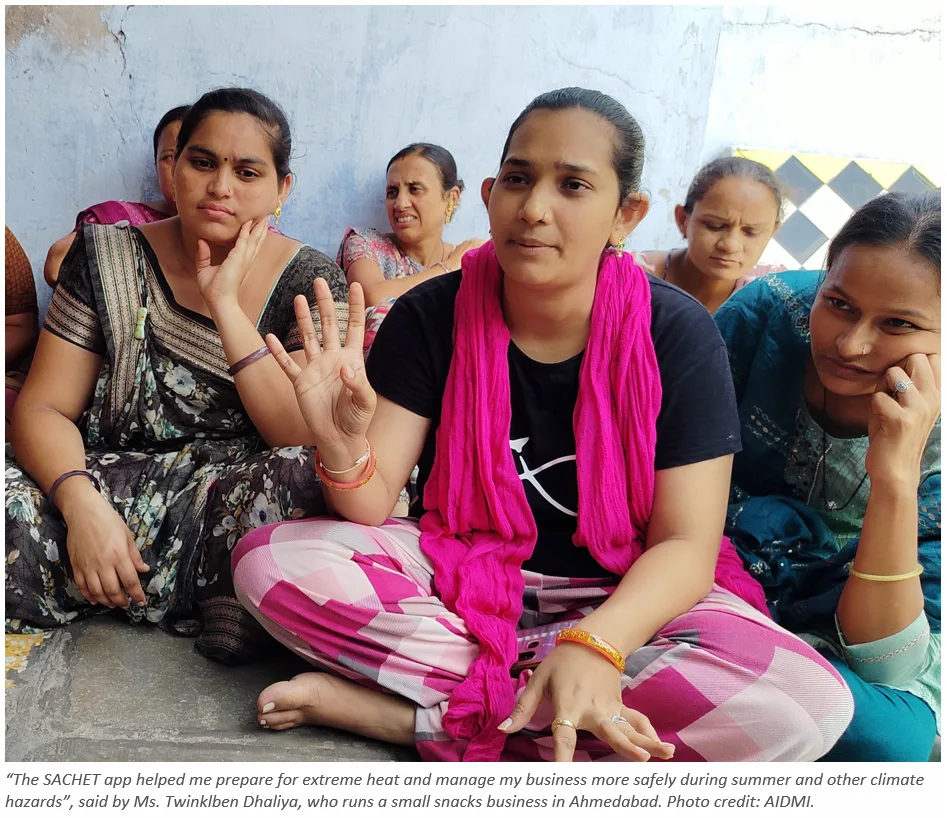
Practitioners from All India Disaster Mitigation Institute (AIDMI), Red Cross and Red Crescent (RCRC) Climate Centre, International Medical Corps, Oxfam, and the Ministry of Health for South Sudan joined the session to share solutions and field experiences.
Preparedness is needed to move faster than rising temperatures.