Search
Or hit enter to search
By Achyut Luitel, Duryog Nivaran; Aisha Gul, International Consultant, UN Women Regional Office for Asia and Pacific and the Secretariat for Asia and Pacific Gender in Humanitarian Action Working Group (GIHA); and Mihir R. Bhatt, All India Disaster Mitigation Institute (AIDMI).
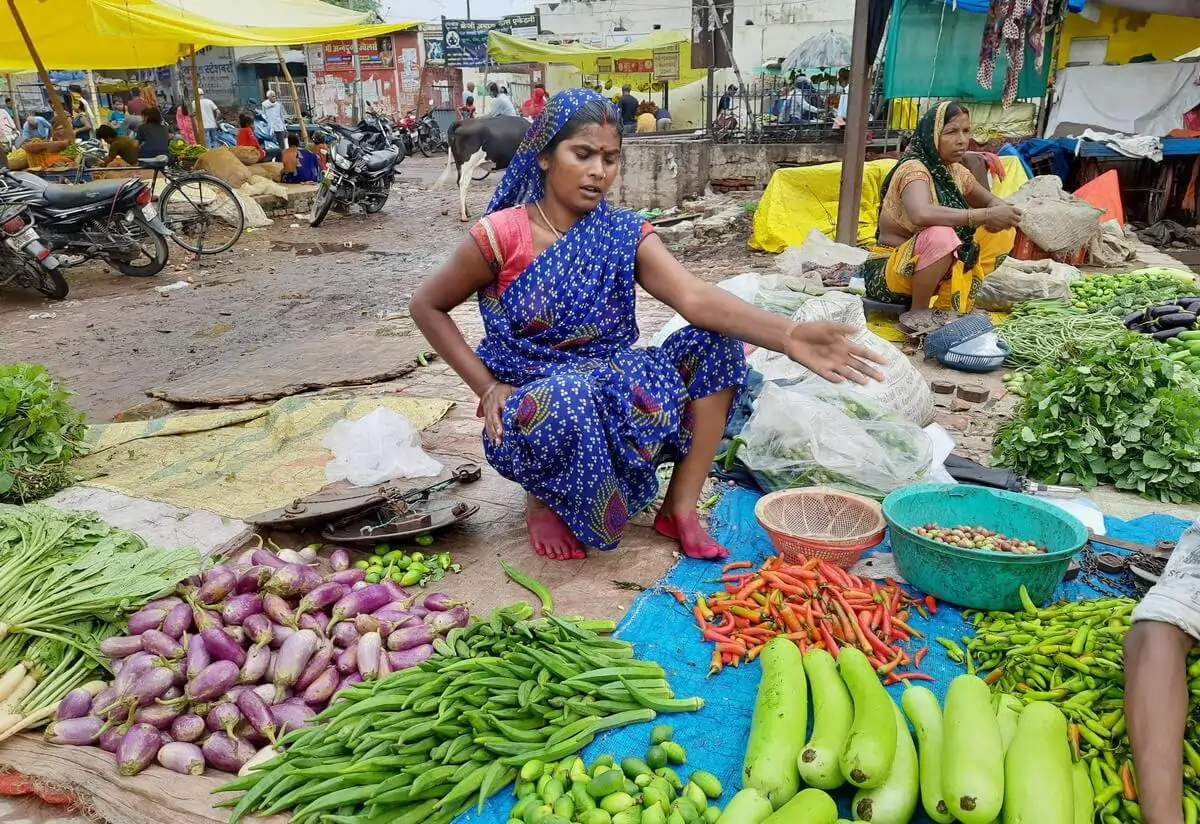
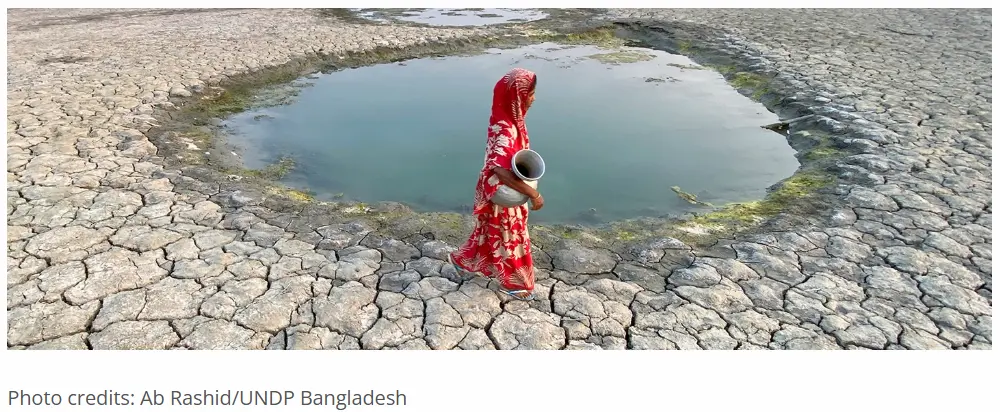
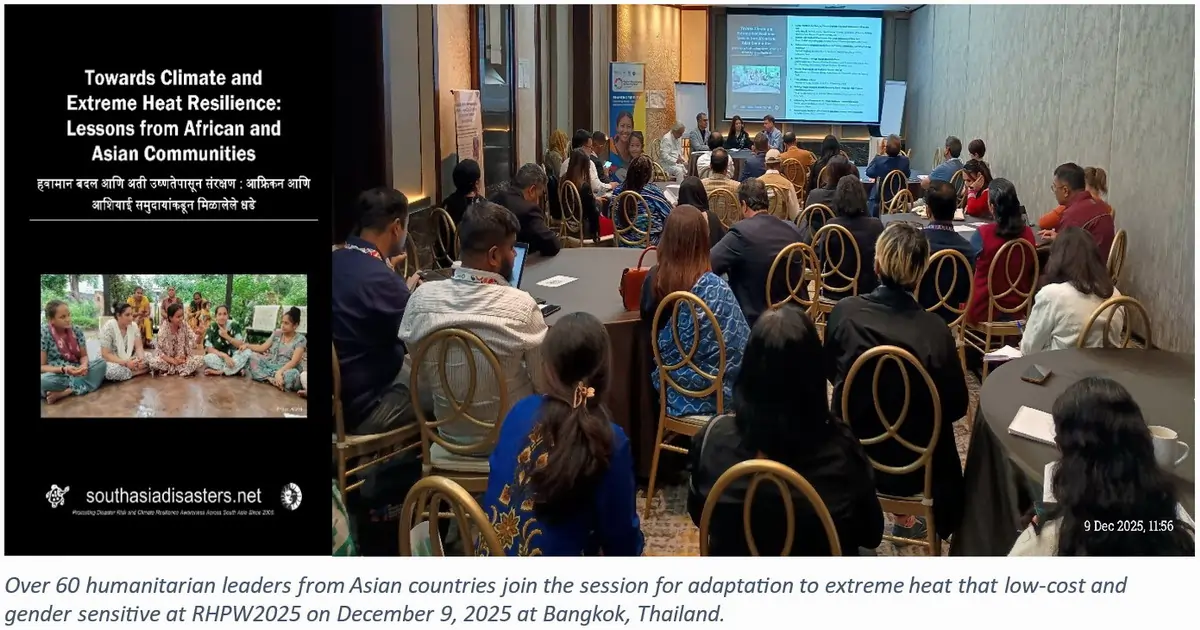
As extreme heat becomes one of the most visible expressions of our changing climate, small businesses across Asia are confronting daily loss and damage that threatens their work, wellbeing, and future. The Innovation Spotlight on Small Business Adaptation to Extreme Heat and Loss and Damage brought together practitioners and regional leaders who are united by a simple truth: the frontline already holds many of the solutions we need. The session at RHPW2025 attended by over 60 humanitarian leaders from Asian countries.
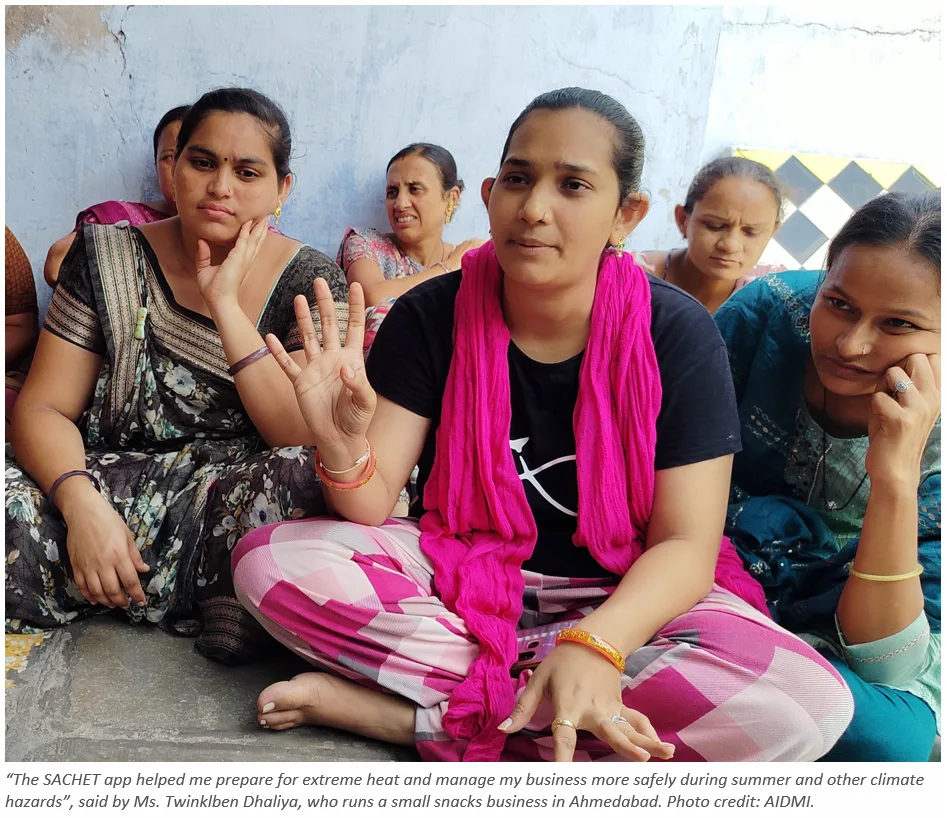
Opening the discussion, Vishal Pathak of AIDMI reflected on what over 2000 small business owners across India have shared through AIDMI’s fieldwork: “Extreme heat is not a future crisis for small businesses—it is a lived reality shaping income, health, and daily rhythms of work.”
Their voices, documented in Issue 227 of Southasiadisasters.net, reveal both the fragility and ingenuity of small enterprises navigating heat-stressed cities. As Vishal noted, “Low-cost cooling practices, peer learning, and timely early warnings are already making adaptation possible from the ground up.” Heat Adaptation and Climate resilience stories has been captured from Ghana, Bangladesh, Kenya, Nepal, and India. Latest issue of southasiadisasters.net launched at the session.
Speaking from a regional perspective, Achyut Luitel, Chair of Duryog Nivaran, reminded us that loss and damage cannot be understood only through economic metrics. “Every heatwave also disrupts learning—children miss school, families reorganise their days, and communities carry cumulative losses that rarely get counted,” he said. Yet he emphasized a growing landscape of local innovation across Asia. “Communities are not waiting; they are adapting in small but powerful ways. Our task is to help these solutions travel further and reach wider.”
From UNOCHA, Daniel Gillman highlighted the critical role of preparedness in reducing heat-related suffering. “What stands out is how effective simple, low-cost measures can be when supported by early warnings,” he observed. Daniel underscored the need to strengthen anticipatory action systems that move resources before a heatwave peaks: “Preparedness should feel practical, accessible, and immediate—something a small business owner can act on the moment they receive a warning.”
Bringing a gender lens, Aisha Gul, International Consultant, UN Women Regional Office for Asia and Pacific and the Secretariat for Asia and Pacific Gender in Humanitarian Action Working Group (GIHA) drew attention to the impressive inclusion achieved by AIDMI’s work. “When 67% of the 2,000 small businesses supported are women-led, it shows that inclusive reach is not just good coverage—it is good climate strategy,” she stated. Women are among the first to experience heat stress at home and at work, and therefore essential to designing cooling solutions that truly work. Gul called for deeper engagement: “Gender-sensitive cooling must be the norm, not the exception.”
Looking ahead, Mihir R. Bhatt, Director of AIDMI, called for scale and shared purpose. “Extreme heat is moving faster than our systems. We need cooling solutions that are low-cost, locally led, and deployed at city scale.” He emphasized the importance of climate financing, nature-based cooling, and transforming heat early warnings into tools of empowerment. “Small businesses are not just affected groups—they are central actors in shaping heat-resilient cities.”
As the session concluded, AIDMI called for a clear way forward: Scale proven local solutions, invest in heat-linked insurance, strengthen community leadership, and integrate cooling support into humanitarian and development planning at all levels in Asia with support from IFIs, sub-national and national authorities. Extreme heat is redefining risk-and with it, the future of millions of small businesses in Asia. The time for collective and sustained action is now.
Together, these reflections offer a clear direction: listen to the frontline, trust local solutions, deepen gender-sensitive action, and build systems that prepare rather than react. In the face of rising temperatures, the leadership of small businesses—and those who stand with them—points toward a more resilient urban future.