Led by AIDMI and Alfred Deakin Institute
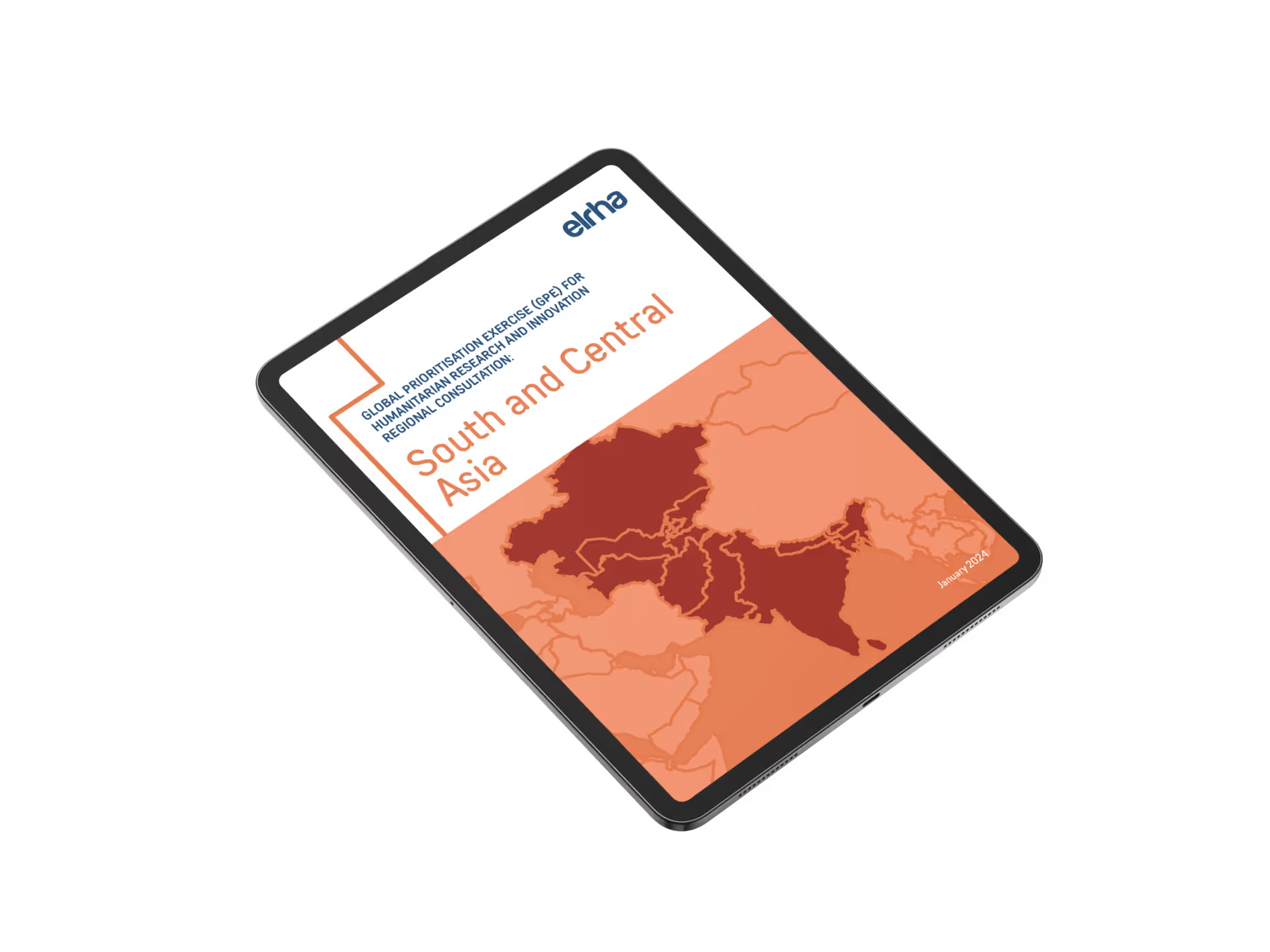
The South and Central Asia (SCA) regional consultation report explores the perspectives of regional stakeholders to better understand the research and innovation (R&I) ecosystem, decision-making processes, and priority areas. It also provides insights into implementing culturally and contextually appropriate humanitarian research and innovation (HRI) responses.The SCA region, spanning 13 countries, faces a range of natural and human-made challenges.
- Central Asia (78 million people) grapples with natural hazards, conflicts, and economic pressures influenced by crises in Afghanistan and Russia.
- South Asia (1.92 billion people) remains highly vulnerable to disasters such as floods and earthquakes, while also facing instability in Afghanistan, economic crises in Sri Lanka and Pakistan, and the Rohingya refugee crisis in Bangladesh.
Humanitarian research and innovation can play a vital role in strengthening crisis management and response in these regions.
Key Findings
Challenges and Barriers to R&I
- Political constraints, low prioritisation, limited data access, and inadequate funding slow down both production and utilisation of R&I.
- In Central Asia, security concerns restrict data sharing.
- In South Asia, weak partnerships and outdated findings limit relevance and impact.
Misalignment of R&I Investments
- Current funding often reflects donor priorities rather than local needs.
- Greater transparency and inclusivity are required to align investments with the region’s critical humanitarian challenges.
Factors Affecting Responsiveness
- Effective crisis response depends on funding, governance, political will, and partnerships.
- Barriers include insufficient resources, bureaucratic delays, limited data sharing, and geopolitical instability.
Recommendations
- Increase R&I Funding: Create flexible funding mechanisms, promote co-financing, and ensure transparency in resource allocation.
- Strengthen Collaboration & Coordination: Build formal platforms for dialogue, foster diverse partnerships, and enhance cross-border cooperation.
- Enhance Local Relevance & Actionability: Adapt R&I outputs to cultural, economic, and environmental contexts, ensuring accessibility and scalability.
- Identify & Prioritise R&I Areas: Use inclusive, region-specific priority-setting exercises and build local capacity for ongoing evaluations.
- Develop Regional R&I Capacity: Invest in institutions, modernise infrastructure, adopt new technologies, and train a skilled workforce.
- Establish a Regional Early Warning System (EWS): Create a comprehensive EWS with uniform guidelines to monitor hazards, assess risks, and share timely warnings.
By implementing these measures, South and Central Asia can strengthen preparedness, response, and recovery efforts—leading to more effective and contextually relevant humanitarian outcomes.
About the Consultation
This consultation was undertaken by the All India Disaster Mitigation Institute (AIDMI) and the Alfred Deakin Institute, Deakin University, as part of Elrha’s Global Prioritisation Exercise (GPE) for Humanitarian Research and Innovation.
- Led by: Mihir R. Bhatt and Vishal Pathak
- Data Collection & Transcription: Mehul Pandya and Kshitij Gupta
- Data Analysis: Mehul Pandya, Kshitij Gupta, Vishal Pathak, Chaza Akik, and Marian Abouzeid
What is the Global Prioritisation Exercise?
The Global Prioritisation Exercise (GPE) for humanitarian research and innovation aims to improve outcomes for people affected by crises by:
- Amplifying the impact of research and innovation investments.
- Identifying priorities at local, regional, and global levels.
- Providing a clear roadmap for funding and attention in the humanitarian R&I ecosystem.
- See more
👉 Read report
👉 GPE Methodology
👉 GPE Regional KII Guide (English)


 Back to Co-creating Knowledge