Search
Or hit enter to search
Zoom Registration Link:
https://us02web.zoom.us/meeting/register/QHbauvrQRkOrSF4jNwa0zw#/registration
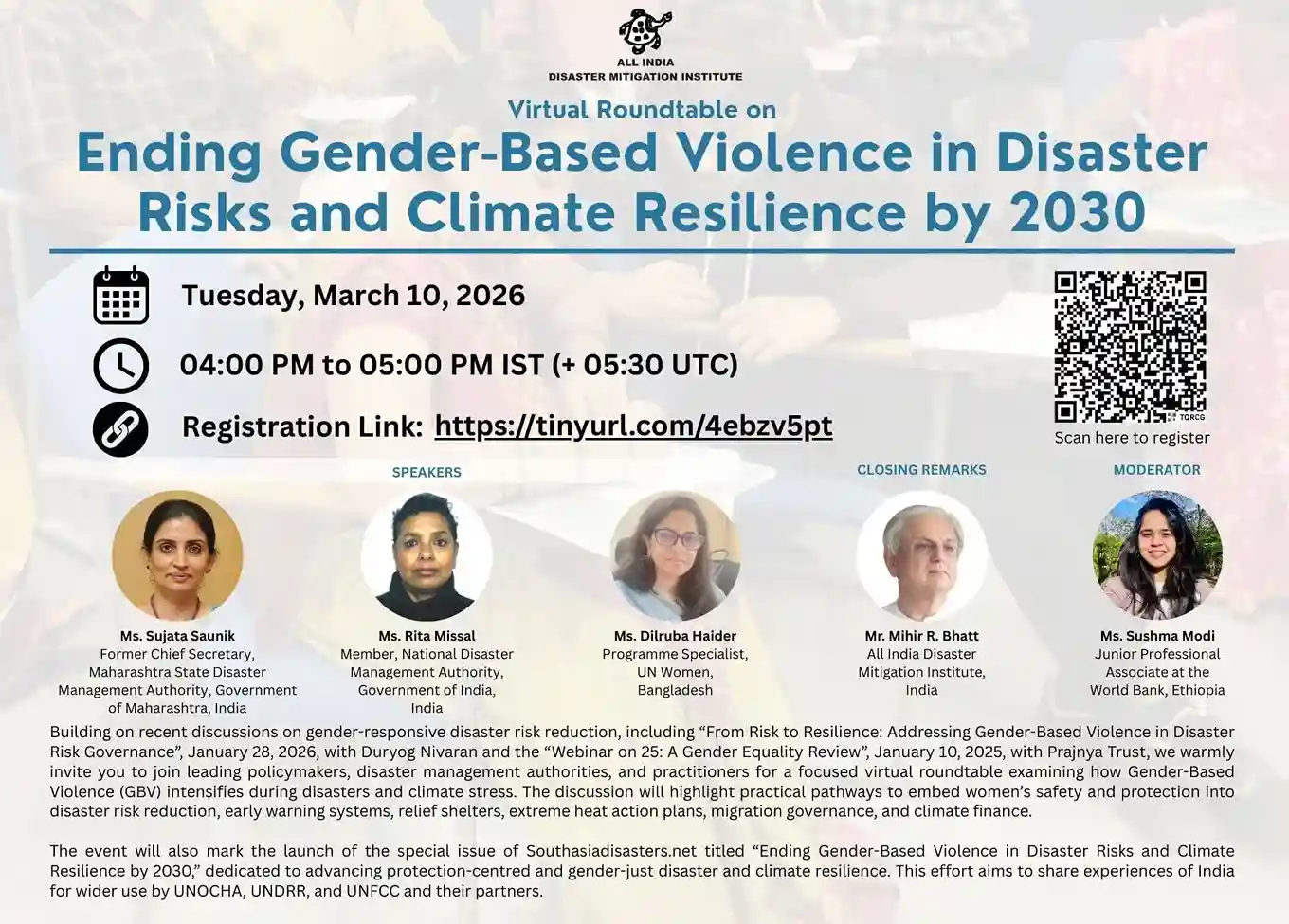
The All India Disaster Mitigation Institute (AIDMI) is convening a Virtual Roundtable on “Ending Gender-Based Violence in Disaster Risks and Climate Resilience by 2030” on Tuesday, March 10, 2026, 4:00 PM to 5:00 PM IST. This timely dialogue will bring together leaders from national and state disaster management authorities, civil society organisations, researchers, and practitioners keen to address Gender-Based Violence (GBV) by 2030, on International Women’s Day.
Disasters and climate stress — including floods, cyclones, extreme heat, displacement, and migration — often intensify existing inequalities and expose women and girls to heightened risks of gender-based violence (GBV). Yet GBV remains largely invisible within disaster risk reduction (DRR) and climate adaptation frameworks, through key efforts are done at the national and state levels.
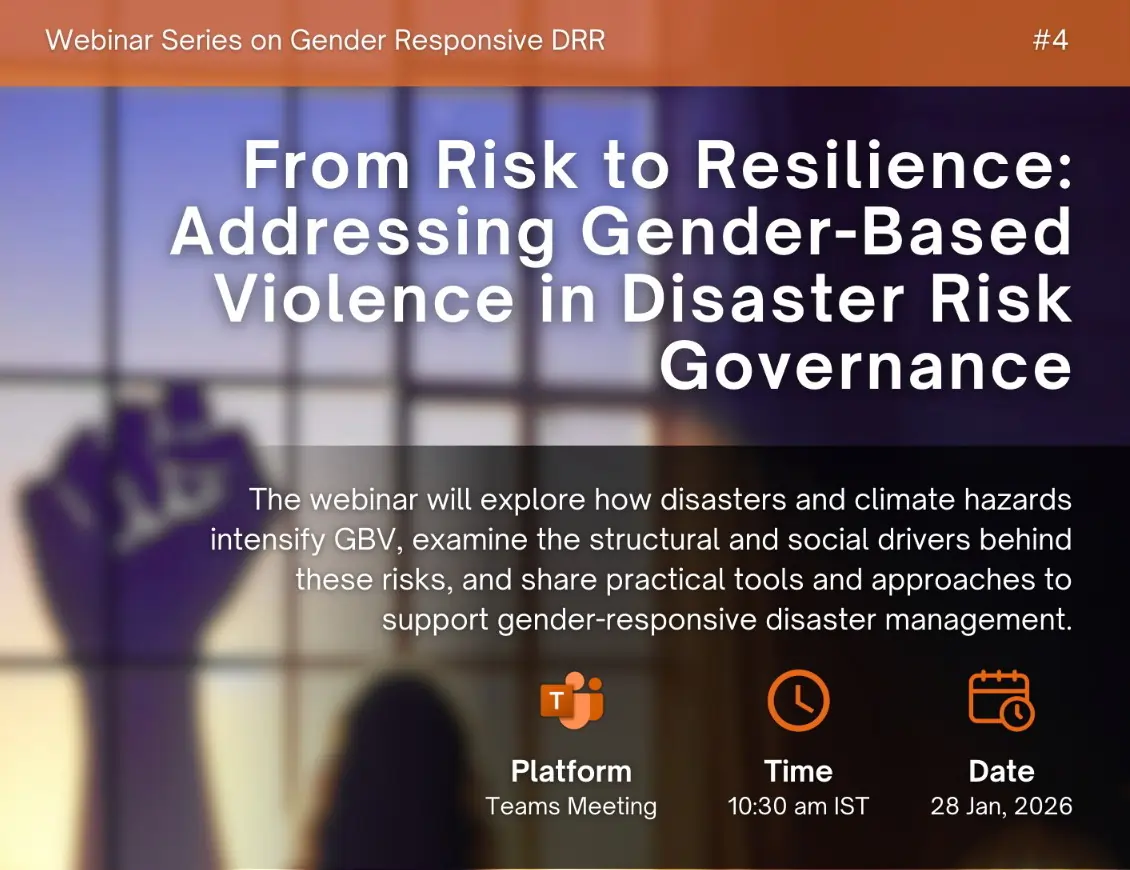
Building on recent discussions on gender-responsive disaster risk reduction, including “From Risk to Resilience: Addressing Gender-Based Violence in Disaster Risk Governance”, January 28, 2026, with Duryog Nivaran and the “Webinar on 25: A Gender Equality Review”, January 10, 2025, with Prajnya Trust, we warmly invite you to join leading policymakers, disaster management authorities, and practitioners for a focused virtual roundtable examining how Gender-Based Violence (GBV) intensifies during disasters and climate stress. The discussion will highlight practical pathways to embed women’s safety and protection into disaster risk reduction, early warning systems, relief shelters, extreme heat action plans, migration governance, and climate finance.
The event will also mark the launch of the special issue of Southasiadisasters.net titled “Ending Gender-Based Violence in Disaster Risks and Climate Resilience by 2030,” dedicated to advancing protection-centred and gender-just disaster and climate resilience. This effort aims to share experiences of India for wider use by UNOCHA, UNDRR, and UNFCC and their partners.
The roundtable will bring together representatives from national and state disaster management authorities, civil society organisations, researchers, and practitioners to deliberate on the following:
The event will also mark the official launch of a special issue of Southasiadisasters.net titled “Ending Gender-Based Violence in Disaster Risks and Climate Resilience by 2030.” The issue presents field-based evidence and policy reflections, emphasising that GBV in disasters is predictable, preventable, and must be systematically addressed within disaster governance frameworks.
📢 Join us to explore how disasters and climate stress heighten the risk of gender-based violence and to identify practical, protection-centred approaches that strengthen inclusive disaster and climate resilience across South Asia.