Search
Or hit enter to search
▶ Watch the Recording: https://youtu.be/ejObayKB-YU?si=_dwgCa3sgmMUXqUX
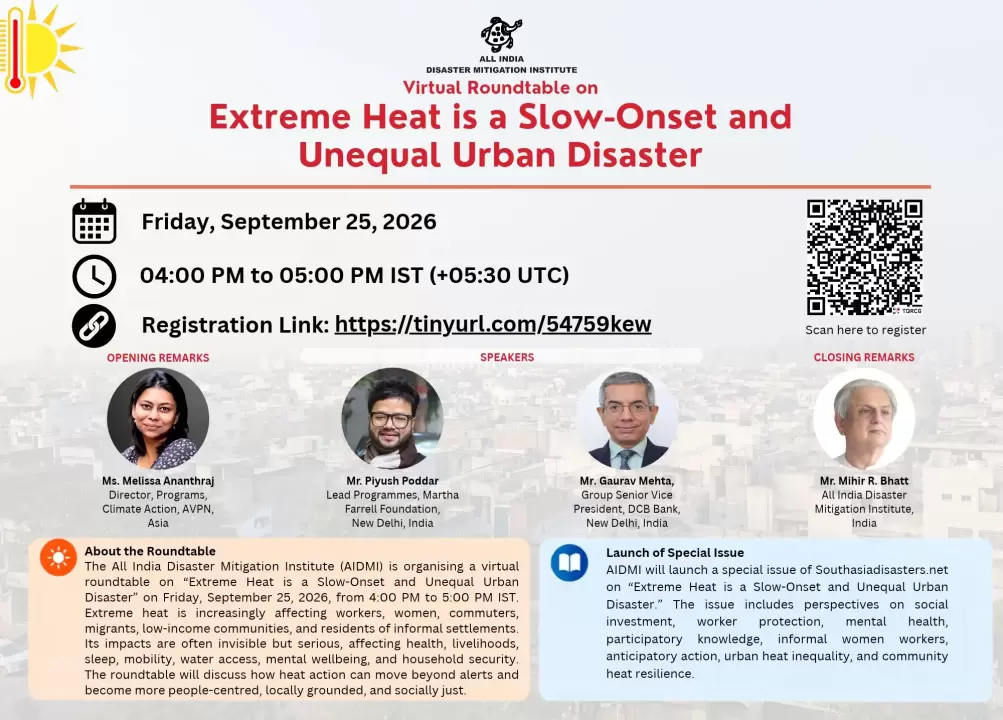
📅 Date: Friday, September 25, 2026
🕓 Time: 04:00 PM to 05:00 PM IST (+05:30 UTC)
📘 Organised by: All India Disaster Mitigation Institute (AIDMI), India
💬 About the Roundtable
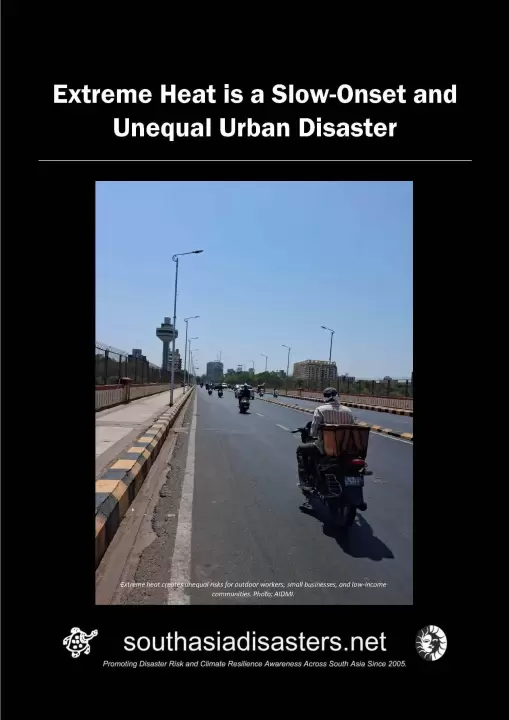
The All India Disaster Mitigation Institute (AIDMI) organised a virtual roundtable on “Extreme Heat is a Slow-Onset and Unequal Urban Disaster” on Friday, September 25, 2026, from 4:00 PM to 5:00 PM IST.
The roundtable examined how extreme heat increasingly affected workers, women, commuters, migrants, low-income communities, and residents of informal settlements. The discussion highlighted that many impacts of extreme heat remained less visible but were serious, affecting health, livelihoods, sleep, mobility, water access, mental wellbeing, and household security.
The roundtable discussed how heat action could move beyond alerts towards approaches that were more people-centred, locally grounded, inclusive, and socially just.
📘 Launch of a Special Issue
During the roundtable, AIDMI launched a special issue of Southasiadisasters.net on “Extreme Heat is a Slow-Onset and Unequal Urban Disaster.” The issue brought together perspectives on social investment, worker protection, mental health, participatory knowledge, women workers, anticipatory action, urban heat inequality, and community heat resilience.
🎯 Key Objectives:
💬 Key Discussion Areas:
🎤 Speakers:
📢 Practitioners, researchers, civil society organisations, community-based organisations, city stakeholders, donor agencies, and others participated in the discussion. The roundtable contributed to an ongoing dialogue on how Indian and South Asian cities could strengthen heat preparedness by connecting early warning with practical protection for populations facing high exposure and limited resources.
Connect with the All India Disaster Mitigation Institute (AIDMI) and subscribe for updates on upcoming events, publications and initiatives.