Search
Or hit enter to search
Every year on World Meteorological Day, the world reflects on the importance of weather, climate, and water in shaping our future. In 2026, the focus is not only on observing weather patterns but on using this knowledge to protect lives and build resilience, especially against one of the most dangerous and growing threats—extreme heat.
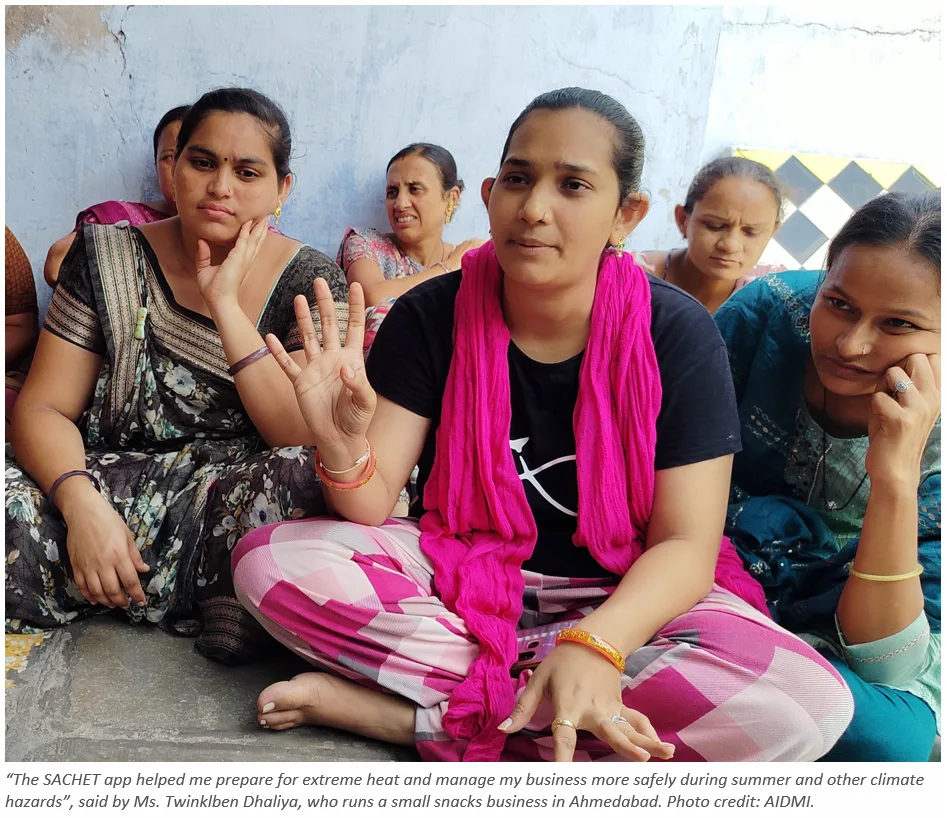
“Weather data is no longer just information—it is a tool for survival, said a heat-affected vulnerable vendor in Ahmedabad city.”
India, in particular, stands at the frontline of this challenge and its solution. With rising temperatures, earlier heatwaves, and increasing urbanisation, extreme heat is no longer just a seasonal discomfort—it has become a serious humanitarian and development issue for reaching Viksit Bharat 2047.
Compounding Heat Risk in India
Over the past years, India has witnessed more frequent and intense heatwaves, often arriving earlier than expected and staying on longer. States like Gujarat, Rajasthan, and parts of central India are experiencing prolonged periods of extreme temperatures. Scientific evidence shows that Asia is warming faster than the global average, making countries like India more vulnerable.
“Climate change is not a distant threat—it is already reshaping my daily life, repeated heat affected fast food seller in Ahmedabad.”
The impacts are widespread. Extreme heat affects public health, causing dehydration, heatstroke, maternal health, and even death. It reduces worker productivity and income, especially for outdoor labourers such as construction workers, street vendors, and transport workers. It also places pressure on water supply, electricity demand, air quality and urban infrastructure.
Key Achievements
Despite the growing risks, India has made significant progress in addressing extreme heat.
One major achievement is the strengthening of early warning systems by the India Meteorological Department. Improved forecasting now allows authorities to issue advance heatwave alerts, helping communities prepare and respond.
Another important step is the development of Heat Action Plans across several cities, initiated by Ahmedabad Municipal Corporation and popularised by the National Disaster Management Authority. These plans include early warnings, public awareness campaigns, and emergency response measures such as cooling centres and water distribution.
India has also benefited from global and regional collaborations. Initiatives supported by organisations like the World Meteorological Organisation, United Nations Office for Disaster Risk Reduction and the World Health Organisation are helping link climate data with health systems. This ensures that weather forecasts are translated into practical health advisories and actions on the ground.
Equally important is the growing awareness among policymakers and communities that extreme heat must be treated as a leading and overwhelming disaster risk, beyond to floods or cyclones.
“Prepared cities are not built overnight—they are built through planning, learning, and acting, said Cochin community leader.”
India’s Agenda for Cooling
While progress has been made, much more needs to be done. The focus now must shift from simply predicting heatwaves to actively reducing their impact through cooling solutions. For all, with focus on those most affected.
First, cities need to adopt urban cooling strategies. This includes promoting cool roofs, increasing green cover, and designing buildings that reduce heat absorption. Such measures can significantly lower temperatures in dense urban areas, saving lives and incomes.
Second, there is an urgent need to protect vulnerable groups, especially outdoor workers and migrants. Adjusting working hours, ensuring access to drinking water, and providing shaded rest areas can make a critical difference.
Third, early warning systems must be strengthened further by ensuring that alerts lead to clear, local action by the last affected person first. Information should reach people in simple language through SMS, community networks, and local institutions for concrete action.
Key priority is ensuring equitable access to cooling. Poor households often lack access to basic cooling options from public institutions. Expanding affordable solutions like fans, community cooling centres, insurance, early warning, and shaded public spaces is essential.
Nature-based solutions also offer powerful cooling benefits. Restoring water bodies, planting trees, and protecting urban wetlands can help regulate local temperatures while improving environmental health.
Finally, data must drive decision-making. Weather and climate information should be integrated into urban planning, public health systems, and disaster management strategies to make our cities and economy regenerative.
World Meteorological Day 2026 reminds us that weather data is not just about forecasting—it is about saving lives and securing the future of all citizens. For India, tackling extreme heat requires a combination of science, policy, and community action at accelerated rates.
The challenge is clear: move from awareness to action, from prediction to protection. By investing in cooling solutions and inclusive resilience strategies, India can reduce the growing risks of extreme heat and build a safer, more livable future for all before 2047.
*By Grace George and AIDMI team for World Meteorological Day 2026 Celebrations with thanks to the Indian Meteorological Department and the National Disaster Mitigation Authority on March 19, 2026.