Search
Or hit enter to search
Southasiadisasters.net, Issue No. 229 | February 2026
Co-editors: Dr. Johnny Ruangmei and Mihir R. Bhatt
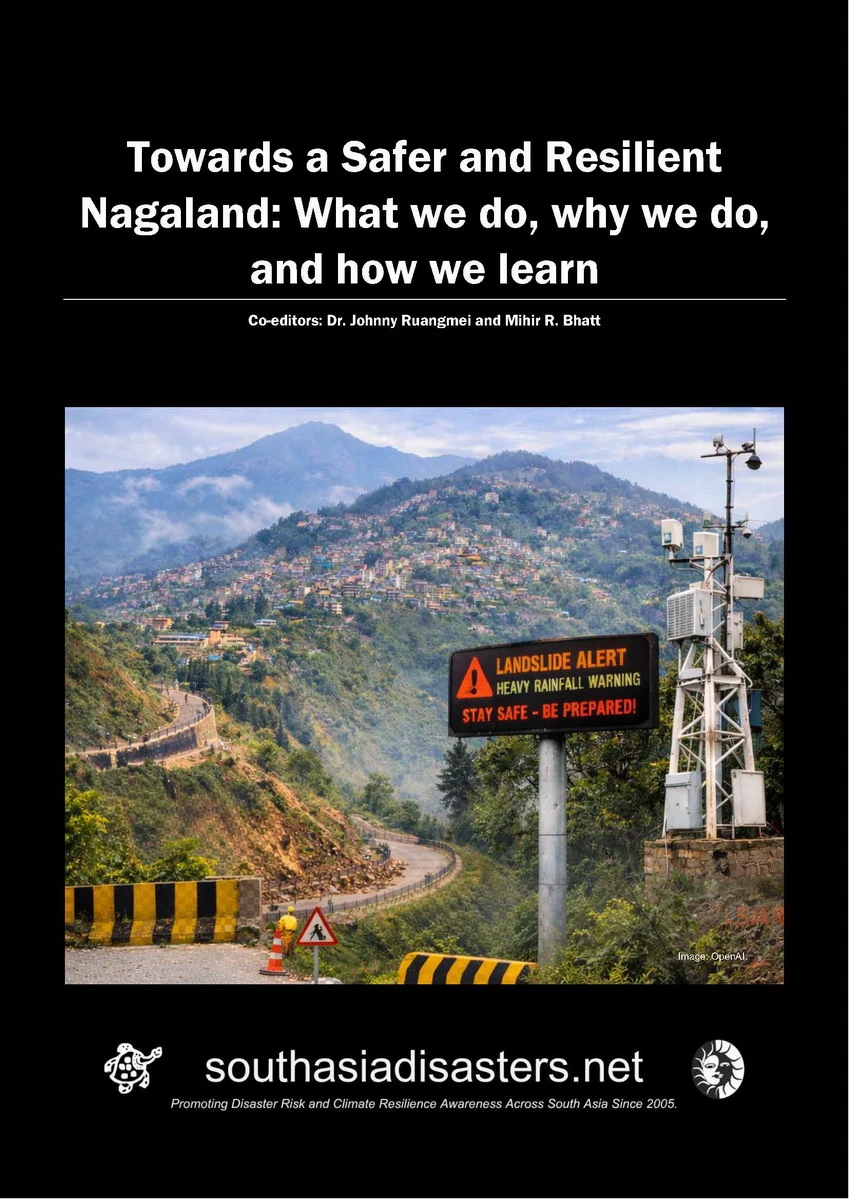
Nagaland is emerging as an important example of how disaster resilience can be strengthened through leadership, institutional innovation, science-based decision-making, and local partnerships. This issue of Southasiadisasters.net brings together reflections on what Nagaland is doing, why these efforts matter, and how wider learning can be drawn from them. The issue foregrounds a clear message: resilience is not built through isolated projects, but through connected systems that link policy, preparedness, knowledge, finance, and community action.
Drawing on contributions from the Nagaland State Disaster Management Authority (NSDMA), AIDMI, UNDRR, NagaEd, and international partners, the issue examines how Nagaland is addressing multiple and evolving risks, including landslides, floods, forest fires, extreme rainfall variability, and wider climate stresses. It highlights practical innovations such as disaster risk transfer, decentralised relief payout systems, urban resilience training, school safety partnerships, precision weather prediction, and risk-informed governance. These efforts are rooted in Nagaland’s broader vision of becoming disaster-ready, climate-resilient, and future-ready.
In This Issue
This issue shows that Nagaland’s experience is relevant far beyond the state. It demonstrates how data systems, institutional coordination, early warning, insurance, and community-centred planning can work together to reduce risk and protect development gains. It also shows that resilience is strongest when governance, science, finance, and trust are treated as part of one coherent system.