

Search
Or hit enter to search
By Mihir R. Bhatt, AIDMI, India
| Heat justice must begin where heat risk is highest — with workers, women, children, commuters, migrants, and low-income communities who carry the greatest burden but have the least protection. |
Extreme heat is here and no longer a future risk for Indian cities. It is already changing how people work, travel, sleep, earn, cook, relax, care, and survive. This issue of southasiadisasters.net shows that heat is not only a temperature event. It is a slow-onset and unequal urban disaster that builds quietly across homes, roads, markets, trees, workplaces, and bodies.
The way ahead is clear. Heat action must move from seasonal response to year-round risk reduction. A city cannot prepare for heat only when alerts are issued. Preparedness must begin before summer, continue during the heat season, and remain part of urban planning after temperatures fall. Heat Action Plans must be annual plans with matching budgets. Heat must be addressed through housing, water, health, labour, transport, social protection, and local governance.
First, Heat Action Plans must become people-centred. The number of plans is growing, but their quality must now deepen and reach the affected people. Plans should identify who is most exposed, where they live and work, and what they need to reduce risk. Street vendors, construction workers, domestic workers, gig workers, bus drivers, rickshaw drivers, sanitation workers, waste workers, migrants, homeless, older persons, children, and residents of informal settlements must be central to planning.
Second, heat is linked with water security. Advising people to drink more water has limited value where safe, affordable, and reliable water is not available. Heat Action Plans must connect with city water balance plans, sanitation systems, wastewater treatment, stormwater management, rainwater harvesting, and restoration of waterbodies. Water is not only a relief measure; it is urban cooling infrastructure for today and for all days to come.
Third, cooling must be treated as public infrastructure. Shade, rest spaces, cool roofs, green cover, drinking water points, toilets, cooling centres, and safer work conditions are not optional welfare measures. They are practical disaster risk reduction actions. Cities must invest in cooling where heat exposure is highest, not only where visibility is highest. Cooling must be community infrastructure, local infrastructure.
Fourth, heat-health systems must include mental health and occupational safety. AIDMI’s evidence from Ahmedabad’s mobility workforce shows that heat affects concentration, sleep, anxiety, irritability, road safety, and daily income. Public health systems must recognise these links and prepare frontline workers, employers, unions, and local institutions to act early.
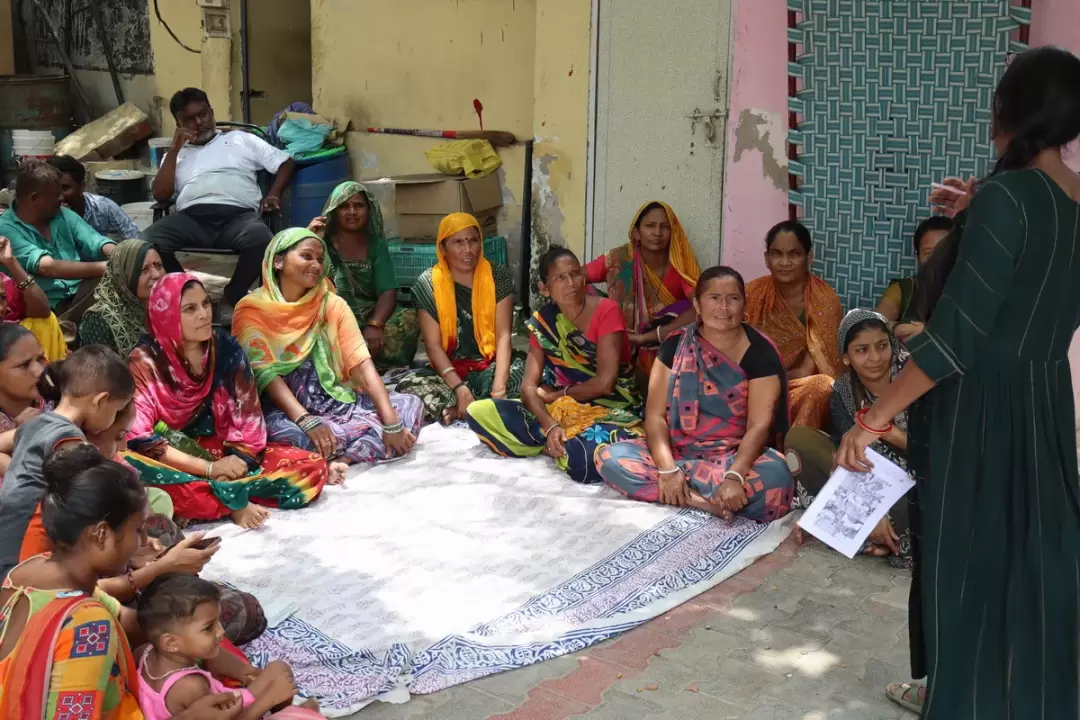
Fifth, communities are knowledge partners. Women’s collectives, worker groups, citizen monitors, and local leaders already know where heat risks are concentrated and which solutions work. Their lived experience must shape warnings, triggers, cooling measures, and follow-up action. Citizen-led monitoring can make invisible heat inequality visible.
Finally, financing must reach those most at risk. Anticipatory action, wage-loss protection, heat insurance, social protection, and local adaptation funds can help vulnerable households act before harm deepens. Without income security, many workers cannot follow heat advisories even when they understand the risk.
The test of urban heat resilience is not whether a city has a Heat Action Plan. The real test is whether the most exposed people can live, work, travel, and care safely during extreme heat. The way ahead is to make heat action local, inclusive, adequately financed, and accountable to those who carry the greatest burden. Heat justice must urgently become central to urban resilience.
Read the full publication: Southasiadisasters.net, Issue No. 233, “Extreme Heat is a Slow-Onset and Unequal Urban Disaster”: https://aidmi.org/extreme-heat-is-a-slow-onset-and-unequal-urban-disaster/
