Search
Or hit enter to search
Southasiadisasters.net, Issue No. 234 | September 2026
“A heat warning becomes meaningful only when it enables the most exposed person to protect health, livelihood, and dignity in time.”
– Mihir R. Bhatt, All India Disaster Mitigation Institute (AIDMI), India
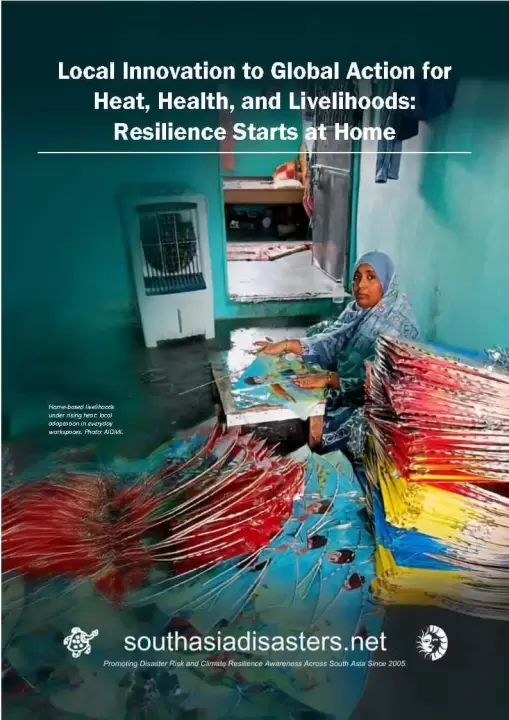
The latest issue of southasiadisasters.net focuses on “Local Innovation to Global Action for Heat, Health, and Livelihoods: Resilience Starts at Home.” The issue brings together experiences from India and South Asia on how households, women workers, local communities, public institutions, and regional networks are responding to the growing risks of extreme heat.
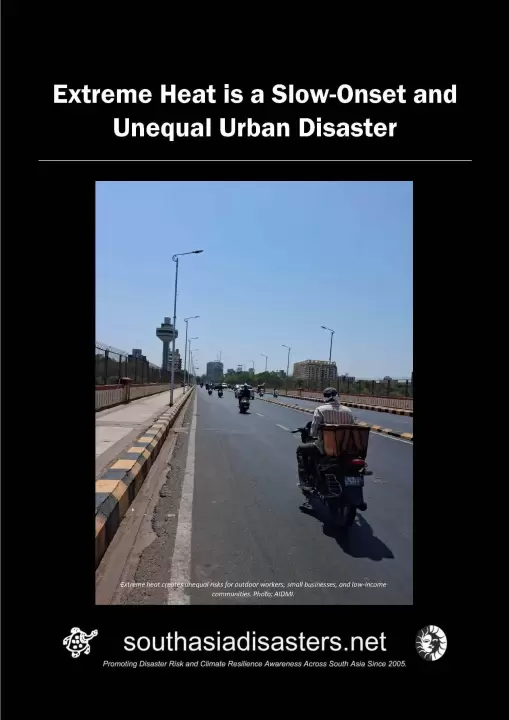
Extreme heat is increasingly affecting health, livelihoods, working conditions, housing, water access, productivity, and local economies. These impacts are unequal. Women workers, home-based producers, informal workers, small businesses, persons with disabilities, older people, and low-income households often face higher exposure while having fewer resources to respond.
The issue highlights the central message of the 2026 International Day for Disaster Risk Reduction: “Resilience Starts at Home”. Effective resilience begins where people live and work, but it must connect with wider systems of early warning, health protection, safer housing, social protection, cooling, local governance, and disaster risk reduction.
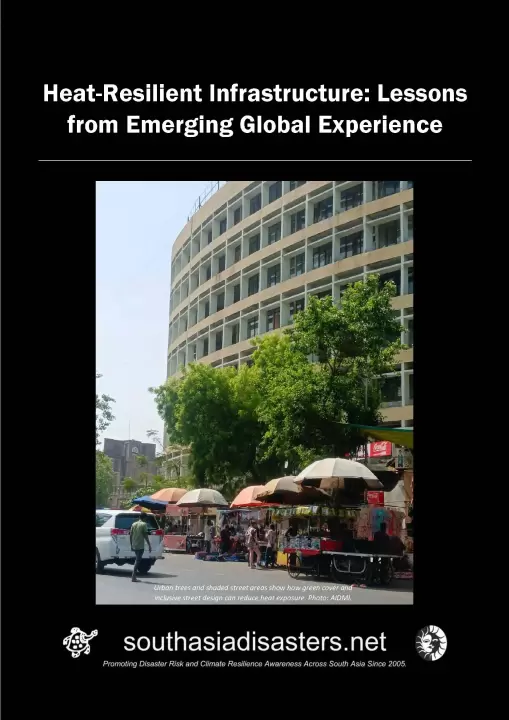
The articles show how locally led action can move from household experience to wider policy and practice. They include experiences on gender-responsive heat action, community-based early warning, climate education, women-led ecosystem restoration, urban cooling, coastal livelihoods, and practical household adaptation.
In this issue
The issue shows that resilience cannot stop at awareness. Heat warnings need to lead to action; safer homes need to connect with safer livelihoods; and locally tested solutions need pathways into public policy, finance, and wider disaster risk reduction systems.
As the Way Ahead argues, the next step is to move from Heat Action Plans to Heat Action Planning for All, ensuring that warnings reach the last mile in forms people can understand and act upon.
Take These Lessons Beyond the Page
Use this issue of southasiadisasters.net to strengthen Heat Action Plans, support locally led solutions, protect vulnerable workers and livelihoods, and turn heat warnings into practical early action at home, in communities, cities, and institutions.
Write for the upcoming Southasiadisasters.net. Share your insights and experience on heat, health, and livelihood resilience. To contribute, write to knowingrisk@aidmi.org.
Connect with the All India Disaster Mitigation Institute (AIDMI) and subscribe for updates on upcoming events, publications, and initiatives.